
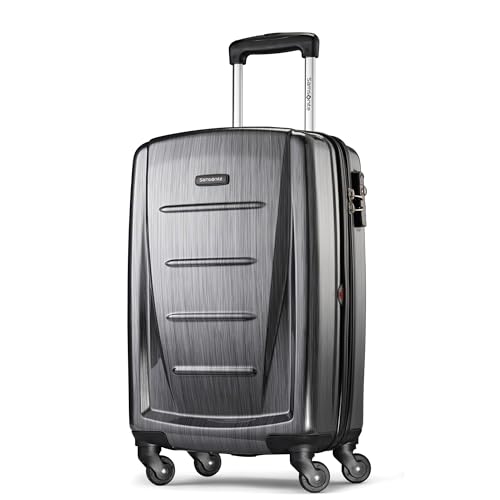
Most suitcases in a given price band are more alike than their listings suggest. What separates a bag you will still like in five years from one you replace in two comes down to a handful of decisions: hard shell or fabric, whether it expands, how it rolls, whether it locks, and — for a carry-on — whether it fits the airline you actually fly.
This guide walks through those decisions, then lists the bags worth shortlisting for each kind of trip. It is built from manufacturer specifications and current listings rather than a drop test; where a detail is the maker’s own claim, it says so. For the size rules themselves, see our airline-by-airline carry-on size guide, and for the shell question in depth, hard vs. soft-sided luggage.
The short version
- Frequent flyer, overhead bin, domestic: a 21-inch softside with outside pockets — the Travelpro Maxlite 5, or the Travelpro Platinum Elite if you want the premium build.
- Hardside carry-on that protects what is inside: the Samsonite Freeform (expandable, TSA lock) or the Delsey St. Tropez 21″.
- International and budget airlines with smaller limits: a 19 to 20-inch bag — the Delsey Helium Aero 19″ or the Samsonite Winfield 2 20″.
- On a budget: the Amazon Basics 21″ hardside with TSA lock.
- A whole household’s luggage at once: the Samsonite Omni 2 three-piece set.
- One checked bag for a week or more: the 25-inch SwissGear Sion.
The decisions that matter
Hardside or softside. A polycarbonate shell protects fragile contents, shrugs off rain and wipes clean. Fabric gives you outside pockets for a laptop and documents, flexes into a tight overhead bin, and hides scuffs. Pure polycarbonate is tougher than ABS or a PC/ABS blend, which is how cheaper hardside bags hit their price — the blend is lighter on the wallet and more likely to crack under a baggage handler.
The size printed on the listing is not the size the airline measures. Airlines measure wheels and handles. A “21-inch” bag is often 22 to 23 inches overall, which passes on most US carriers and fails on many European and Asian ones. If you fly internationally or on budget carriers, buy 19 to 20 inches.
Expansion is for the trip home. An expansion zipper adds roughly two inches of depth. It is useful, and a carry-on that is expanded usually no longer fits the sizer. Treat it as checked-bag capacity.
Wheels. Four spinner wheels glide beside you through a terminal and are the default now. Double (“eight-wheel”) spinners track straighter under load. Spinners sit proud of the case, so they are the first thing to break and they roll away on a slope; two-wheel bags are tougher on cobbles and rarer every year.
Locks. A built-in TSA combination lock saves you buying and losing a padlock. Several budget bags omit it — check before you assume.
The bags compared
| Bag | Shell | Size | Expands | TSA lock | Worth knowing |
|---|---|---|---|---|---|
| Travelpro Maxlite 5 | Softside | 21″ carry-on | Yes | See listing | Built to be light; less impact protection |
| Travelpro Platinum Elite | Softside | 21″ carry-on | Yes | See listing | Eight-wheel spinners; USB pass-through needs your own power bank |
| Samsonite Freeform | Polycarbonate | Carry-on | Yes | Yes | Expanded, it may not fit the overhead sizer |
| Delsey St. Tropez | Polycarbonate | 21″ carry-on | Yes | Yes | Expansion suits soft items; overpacking affects balance |
| Delsey Helium Aero | Polycarbonate | 19″ international carry-on | Yes | Yes | Front laptop pocket costs some interior space |
| Samsonite Winfield 2 | Polycarbonate | 20″ carry-on, about 6.7 lb | No | Yes | Compact; limited capacity for longer trips |
| LEVEL8 carry-on | Hardside | 20″ carry-on | No | Yes | Textured shell; priced above the budget bags |
| Coolife PC+ABS | PC/ABS blend | 20″ carry-on, about 7 lb | No | Yes | Budget hardside; not fully waterproof |
| Amazon Basics hardside (TSA lock) | Hardside | 21″ carry-on | Yes, about 25% | Yes | Fewer compartments; limited colours |
| Amazon Basics hardside (black) | Hardside | 21″ carry-on | Yes, about 25% | No | The cheapest of the three — and no lock |
| SUPER DEAL 21″ | Hardside | 21″ carry-on | Yes | No | Lowest price here; not a premium feel |
| Samsonite Omni 2 set | Polycarbonate | 19″, 24″ and 28″ | Yes | No | Three bags for one price; the 28″ is unwieldy when full |
| SwissGear Sion | Softside | 25″ checked | Yes | Yes | No tech features; less protection than a shell |
| Coolife 5-piece set | ABS | 20″, 24″, 28″ plus two small bags | 28″ only | Yes | ABS is less impact-resistant than polycarbonate |
Details are from the manufacturers’ listings. Dimensions, weights and warranty terms change; confirm them on the current listing, and measure against your airline’s limit before you fly.
Softside carry-ons: Travelpro Maxlite 5 and Platinum Elite
Travelpro builds for people who fly every week, and these two bracket its range. The Maxlite 5 is the light, affordable one: water-resistant fabric, four spinners, an expansion zipper, and very little weight before you have packed anything. The Platinum Elite adds stain- and abrasion-resistant fabric, eight-wheel spinners and a USB pass-through (you supply the power bank). The trade-off with any softside bag is impact protection — fine overhead, less ideal checked with something fragile inside.
Hardside carry-ons: Samsonite Freeform, Delsey St. Tropez, Winfield 2
The Samsonite Freeform is the well-rounded polycarbonate carry-on: expandable, four spinners, integrated TSA lock. The Delsey St. Tropez is its closest rival at 21 inches, also polycarbonate and lockable. The Winfield 2 in 20 inches is smaller and does not expand, which is exactly why it suits stricter sizers. The trade-off: no outside pockets, so your laptop comes out of the main compartment at security.
For smaller international limits: Delsey Helium Aero 19″
The Helium Aero 19″ is sized for international carry-on limits and solves the hardside pocket problem with a front compartment for a laptop. That pocket takes space from the main cavity, and the bag sits toward the top of this group on price. If most of your flying is outside the US, this is the size to own; pack it with our carry-on-only packing guide.
Budget hardside: three Amazon Basics bags that are not the same
There are several Amazon Basics 21-inch carry-ons and the differences matter. The version with a TSA lock is the one to buy. The cheaper black hardside expands by about 25 percent and has no lock; the navy model has eight wheels and a lock, and is heavier than the ultra-light bags. The Coolife 20″ and SUPER DEAL 21″ compete on price; both use cheaper shell materials, and the SUPER DEAL has no lock. For a couple of trips a year, any of these is a reasonable buy. For weekly travel, the wheels and handle on a Travelpro or Samsonite earn their premium.
Sets and checked bags: Samsonite Omni 2, Coolife, SwissGear Sion
The Samsonite Omni 2 set gives you 19, 24 and 28-inch polycarbonate spinners that nest for storage — good value if you need all three, with no built-in lock and a 28-inch case that is easy to pack past an airline’s 50 lb limit. The Coolife five-piece set is the budget version in ABS, and only the largest case expands. For a single checked bag, the 25-inch SwissGear Sion is a lockable, expandable softside at a sensible size. If you want something that packs flat between trips, a 35-inch rolling duffle holds more than any of them — and offers no protection and no lock.
Before you buy
- Measure against your most restrictive airline, wheels and handle included — not the size in the product name.
- Weigh the empty bag against your allowance. On a 15 lb cabin limit, a 7 lb bag is half your packing.
- Read the warranty. Some cover airline damage; many do not.
- Extend the handle fully in the first week. Wobble and sticking are the faults worth returning a bag for.
- Buy a bright strap or tag. Every bag on the carousel is black or navy.
FAQ
Is hardside or softside luggage better?
Hardside protects contents and resists weather; softside gives you outside pockets and flexes into tight spaces. Frequent carry-on travellers tend to prefer softside, and people who check bags tend to prefer a polycarbonate shell.
Will a 21-inch carry-on fit every airline?
No. Most US carriers accept it; many international and budget airlines do not, and they measure wheels and handles. For those, buy 19 to 20 inches.
Is polycarbonate better than ABS?
Yes, for durability. Polycarbonate flexes and recovers; ABS is stiffer and more likely to crack. ABS and PC/ABS blends are how budget hardside bags reach their price.
Are luggage sets worth it?
If you genuinely need three sizes, a set is cheaper than buying them separately and the cases nest for storage. If you only ever carry on, put the whole budget into one better bag.
How we chose
This guide compares manufacturer specifications and the drawbacks owners most often report, and sorts the bags by the kind of trip they suit. It is not a drop test, and nothing here is ranked by commission — see our affiliate disclosure. Prices change constantly, so none are quoted. Prefer a backpack? See the best carry-on travel backpacks.