Some links below are affiliate links. If you buy through one, we earn a commission at no extra cost to you. It never changes a verdict — here is how that works.
I’ve now spent a combined month in India across two separate two-week trips. The cities this last run — Coimbatore, Pune, and Rajkot — were just the latest in a longer list of stops I’ve made across the country for work. I travel there as VP of Sales for a supply chain and procurement company, which means I’m visiting manufacturers and industrial partners, not tourist circuits. Real cities, real logistics, real problems when something goes wrong.
This isn’t scraped from a travel blog. These are the things I tell people when they ask what India is actually like to navigate — and a few things I had to figure out the hard way before the second trip got easier.
Don’t Drink the Water. Ever.
No gray area here.
Tap water in India is not safe for most Western travelers. Your gut bacteria has no preparation for the microbial environment in municipal water systems, and it doesn’t matter how five-star your hotel is. The plumbing is the plumbing.
Sealed bottled water for everything — drinking, brushing your teeth, rinsing your toothbrush. Most hotels stock it in your room. If you’re buying it yourself, look for sealed factory caps (not just “capped”) and recognizable brands like Bisleri or Kinley. Skip ice in drinks unless you explicitly trust the water source, which in practice means skip the ice.
This sounds simple until you’re tired, jetlagged, and you reflexively rinse your toothbrush under the tap at midnight. Don’t.
Know Where You Are Before You Order Meat
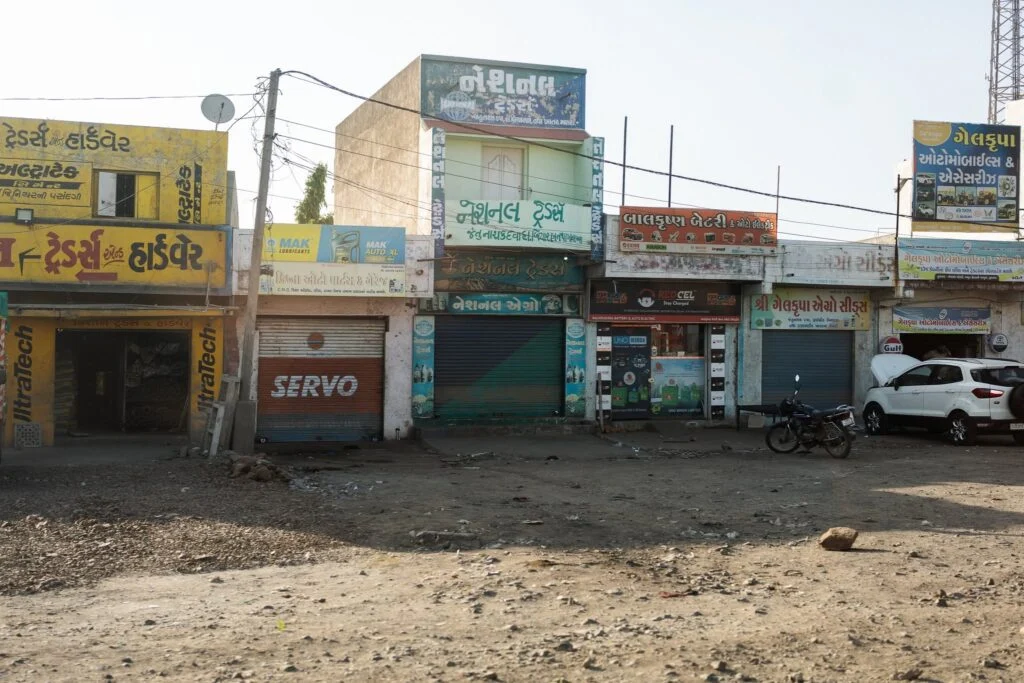
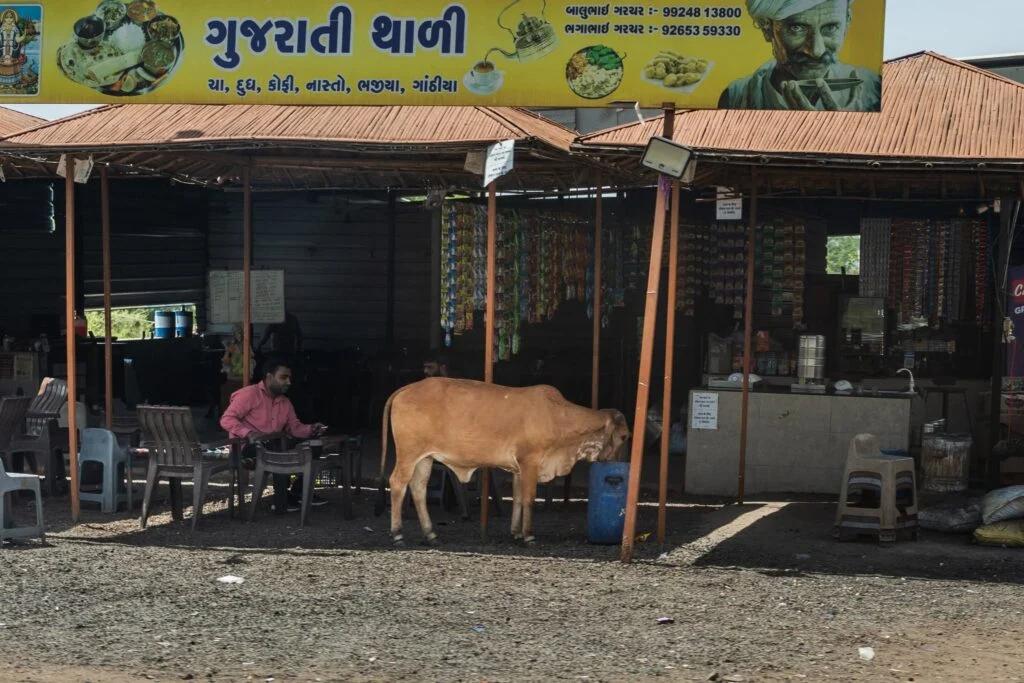
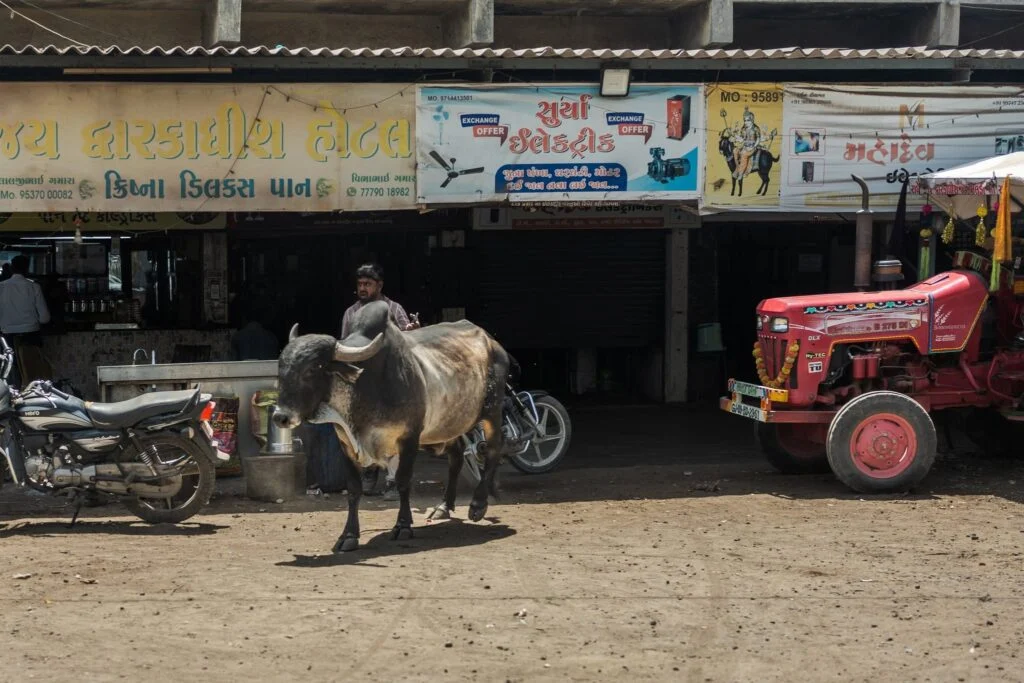
Rajkot, in Gujarat, has one of the highest concentrations of vegetarians in India. Large parts of the population follow Jain or Hindu vegetarian practices, and that shapes everything from what restaurants serve to how meat is handled when it is served. In areas where meat isn’t a cultural staple, the supply chain for it is different — less demand, less turnover, less expertise in storage and preparation. I stopped ordering meat there entirely. Not because of a rule, but because it’s the smart call.
Coimbatore and Pune are different. Both cities have more mixed food cultures and you can eat chicken, fish, and other proteins at reputable restaurants without the same concern. The key word is reputable.
Reputable Restaurants and Hotels Only — Skip the Street Food and the McDonald’s
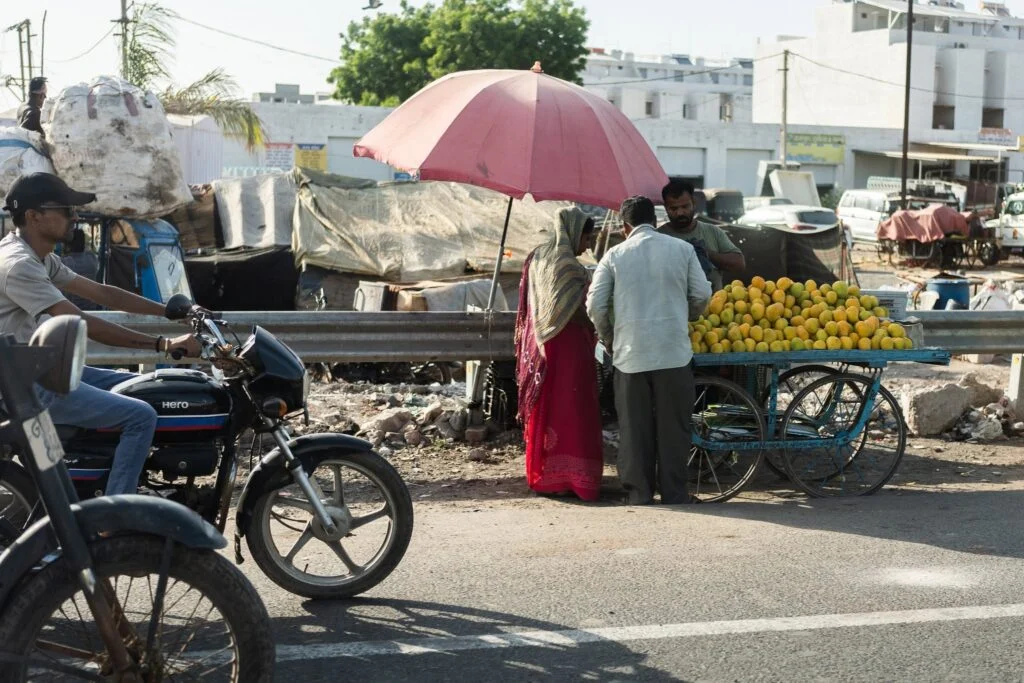
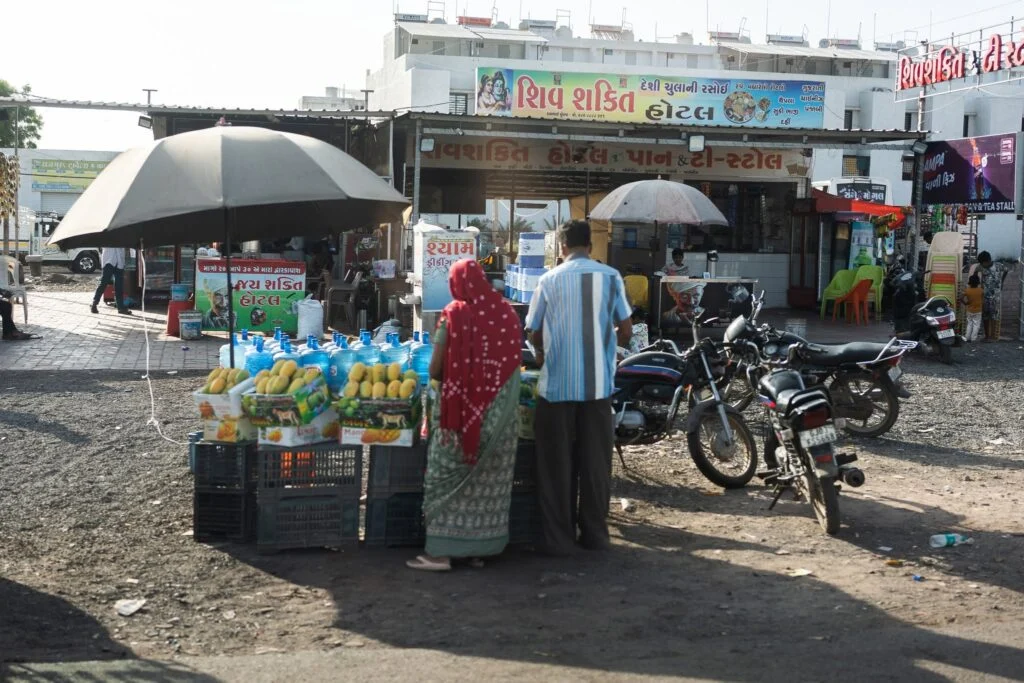
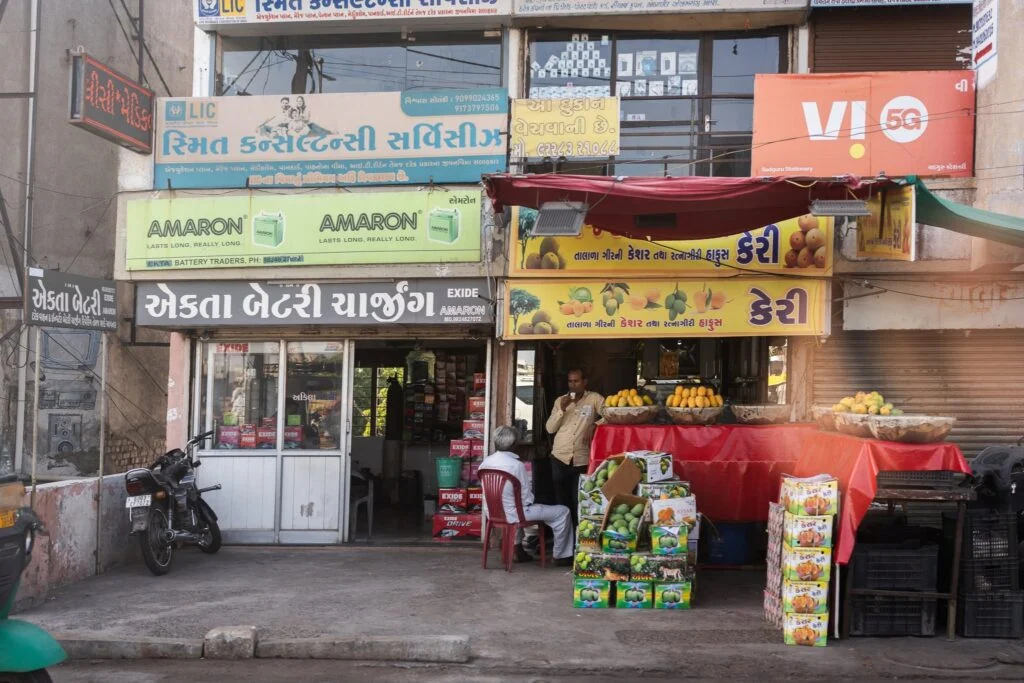
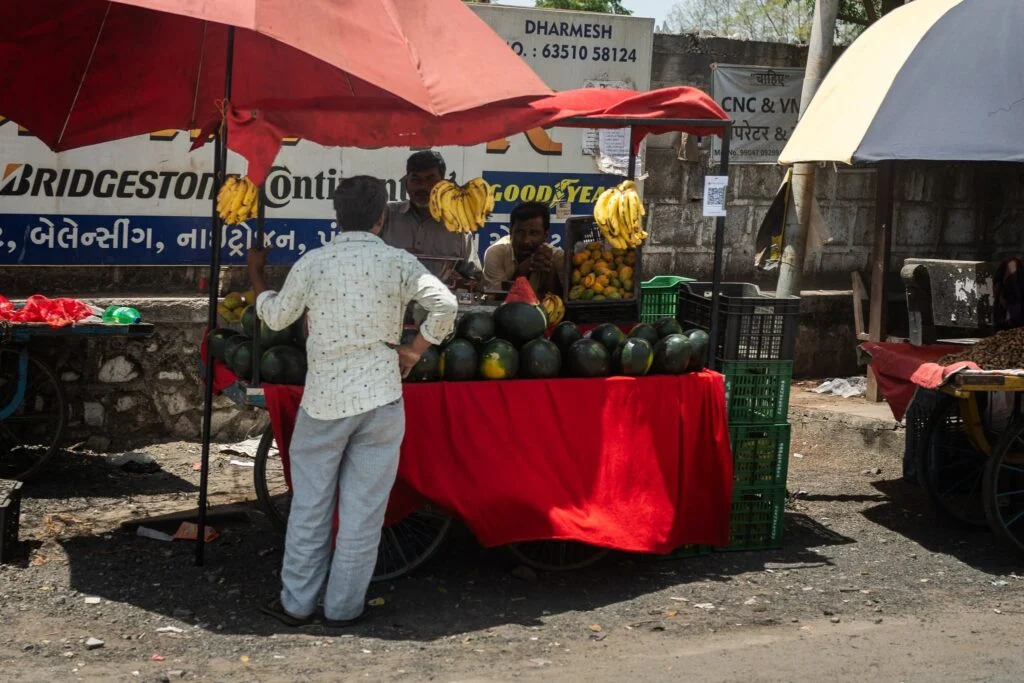
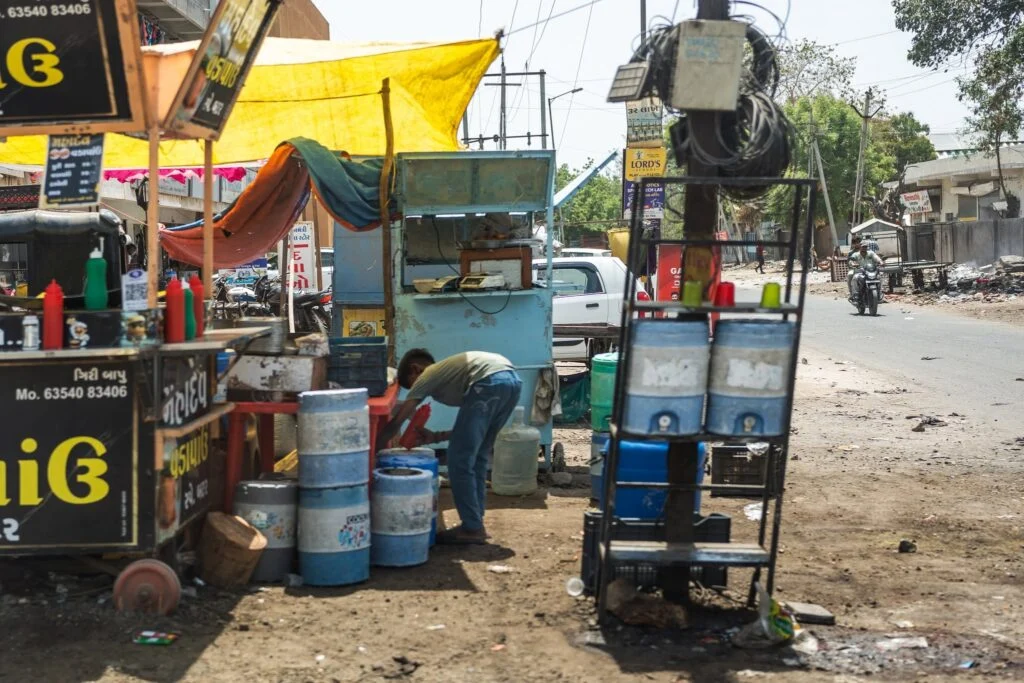
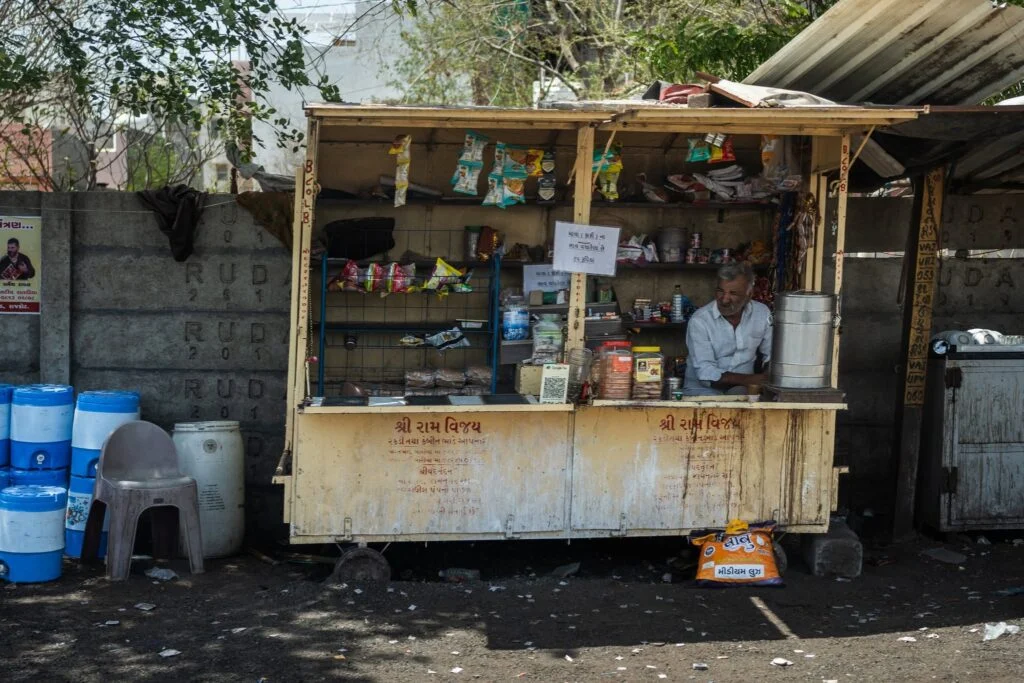
India has some of the most famous street food in the world, and I’m sure a lot of it is excellent if you’ve built up tolerance or know where to go. But for a Western traveler on a short business or first trip, the risk isn’t worth it. Inconsistent water sources, variable storage temperatures, no real way to assess food safety on the fly. Skip it until you’ve been multiple times and have local guidance you actually trust.
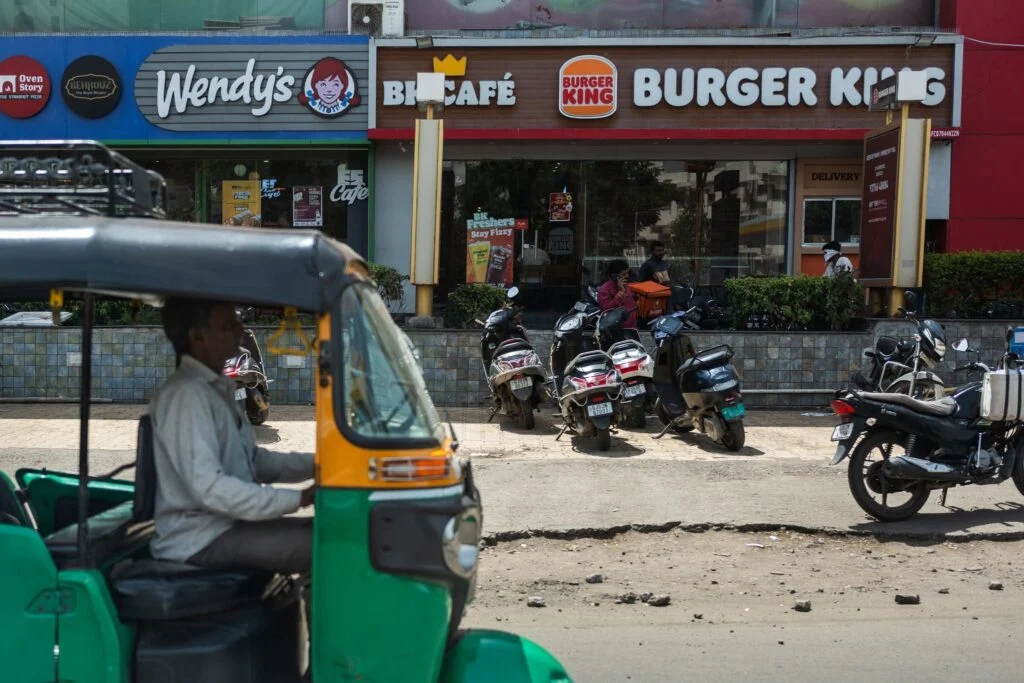
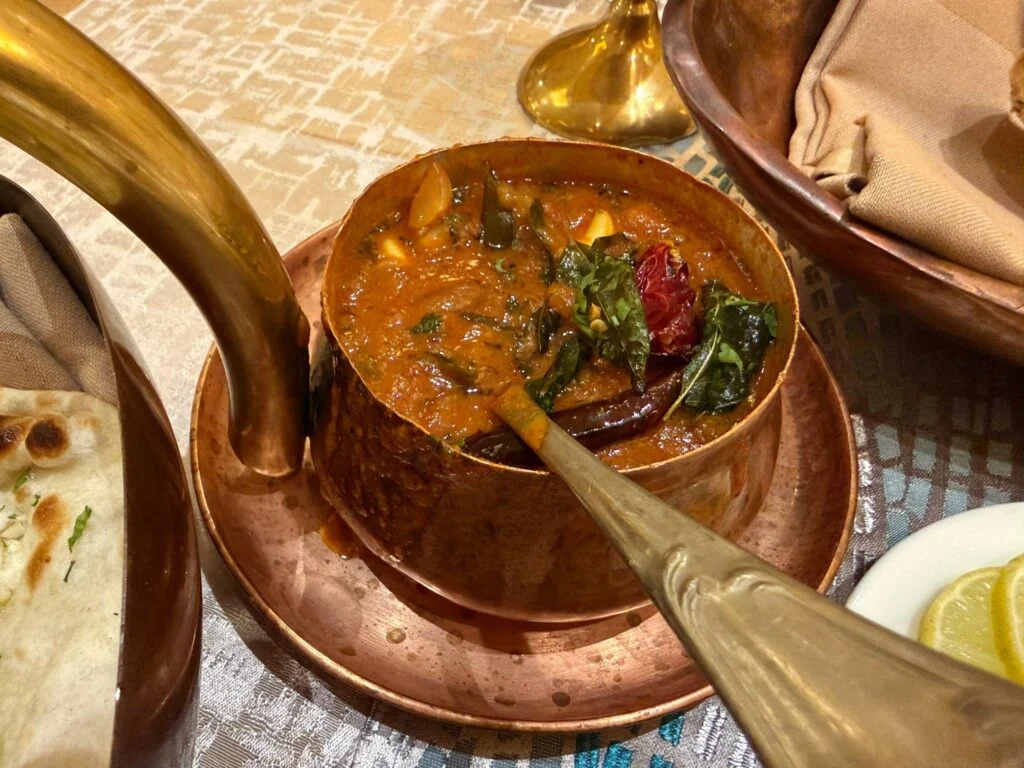
The one that surprises people: skip the American fast food too. McDonald’s, KFC, whatever’s there. The instinct is that a global chain is the “safe” choice. It isn’t. These locations are staffed and supplied locally, and the food safety standards don’t mirror what you’d get in the US. You’re not eating the same product. Just eat Indian food. Good Indian food from a solid hotel restaurant or an established local spot is not only safer, it’s dramatically better.
My filter: hotel restaurants, established sit-down places with a visible lunch crowd of local professionals eating. That’s where you want to be. Real people eating there on a Tuesday is a better signal than any review app.
Don’t Check Your Bags
Flying into India from the US typically means a long international leg through Dubai, Doha, Abu Dhabi, or Heathrow depending on your carrier, then separate domestic legs to your actual destination. On this trip that meant individual hops between Coimbatore, Pune, and Rajkot. Each transfer is another chance for your bag to end up somewhere you’re not. International connections, domestic transfers, terminal chaos — more legs means longer odds, and a week into a two-week work trip without your clothes is not a recoverable situation.
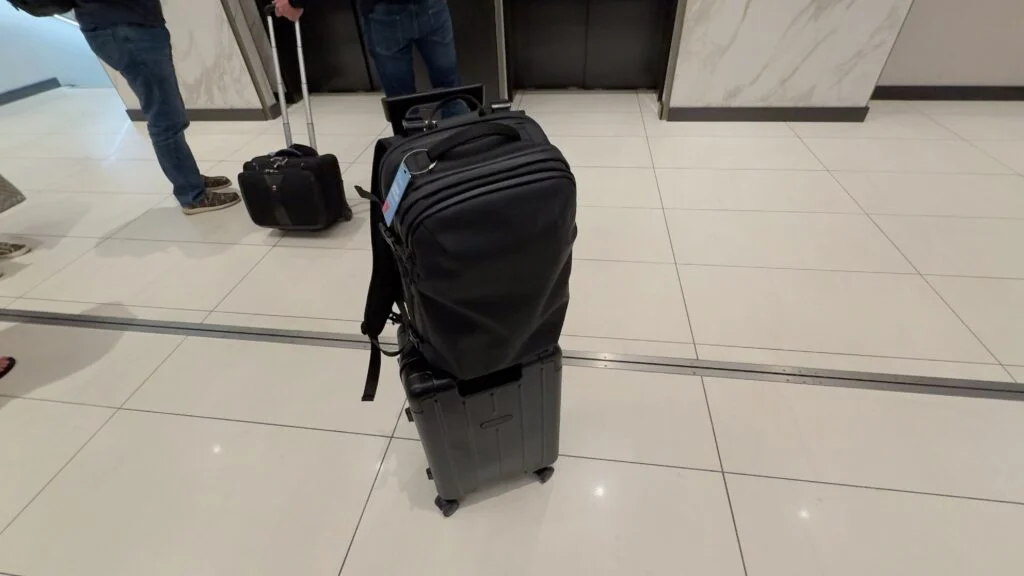
Carry-on only. This is non-negotiable for me now.
I’ve been traveling with the Black Voyage Zephyr vacuum compression backpack and it solves the space problem that makes people feel like they have to check. My full review is on RobbSutton.com, but the short version is that vacuum compression gives you the clothing capacity of a checked bag in a carry-on footprint. Two weeks of clothes, compressed to carry-on legal size. The whole premise changes once you have it.
If you’re working through how to make one-bag travel actually work in practice, GearUpTravel’s one-bag travel guide is worth reading before you start buying gear.
[Black Voyage Zephyr — check current price on Amazon]
The Hotel Laundry Thing Nobody Talks About
This is the actual trick to making carry-on-only work on a long trip, and most packing guides completely skip it.
Nearly every business-class hotel in India offers same-day or next-day laundry service, and it’s cheap by any Western standard. All three cities on this trip had it. Most nights I’d drop off a bag of clothes and have them back pressed and folded by the following afternoon. Once you start doing this, the math of what you need to pack changes completely. A two-week trip doesn’t need two weeks of clothing. Five to seven days of clothes is enough. The compression backpack handles that easily. Everything else is just noise.
Bringing a Camera: What’s Worth Knowing
I traveled with a Sony A7CII and the Sony 40mm f/2.5 on both trips. It’s a compact full-frame setup that doesn’t look like a professional camera rig, which matters more than you might think when you’re moving through factories, industrial sites, and domestic airports where drawing attention to expensive gear isn’t ideal. I was using it primarily for work documentation — components, manufacturing processes, quality records to share with the team back in the US. The 40mm is the right focal length for that kind of work: compact, sharp, and there’s no reason to swap glass.
Customs is worth understanding before you go. A single mirrorless body with one lens generally moves through without issue. If you’re traveling with a more substantial kit — multiple bodies, a bag of lenses — look up the current rules around temporary importation of equipment before you’re standing at the counter figuring it out in real time.
The other thing to know is dust. Indian cities vary a lot on air quality, and in industrial areas there’s genuine particulate in the air. Keep lens changes minimal on hazy days. The 40mm being a do-everything focal length meant I rarely needed to open the bag, which is part of why I chose it. For the full breakdown on packing and protecting camera gear for travel, GearUpTravel’s adventure photography gear guide covers it in depth.
[Sony A7CII — check current price on Amazon] [Sony 40mm f/2.5 G — check current price on Amazon]
Air Quality: Know Before You Go
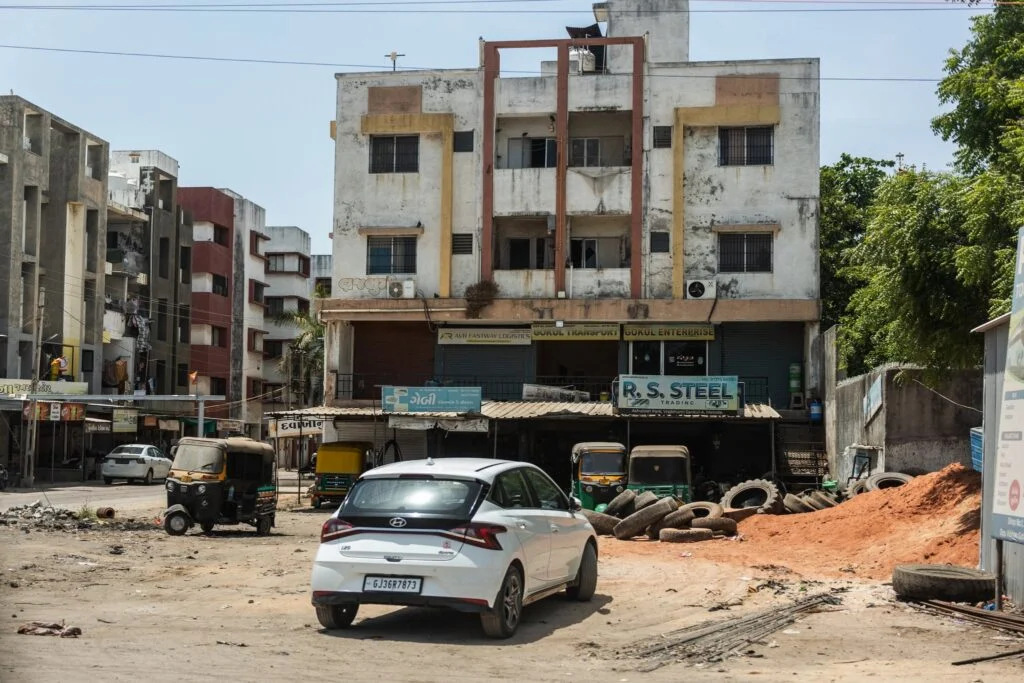
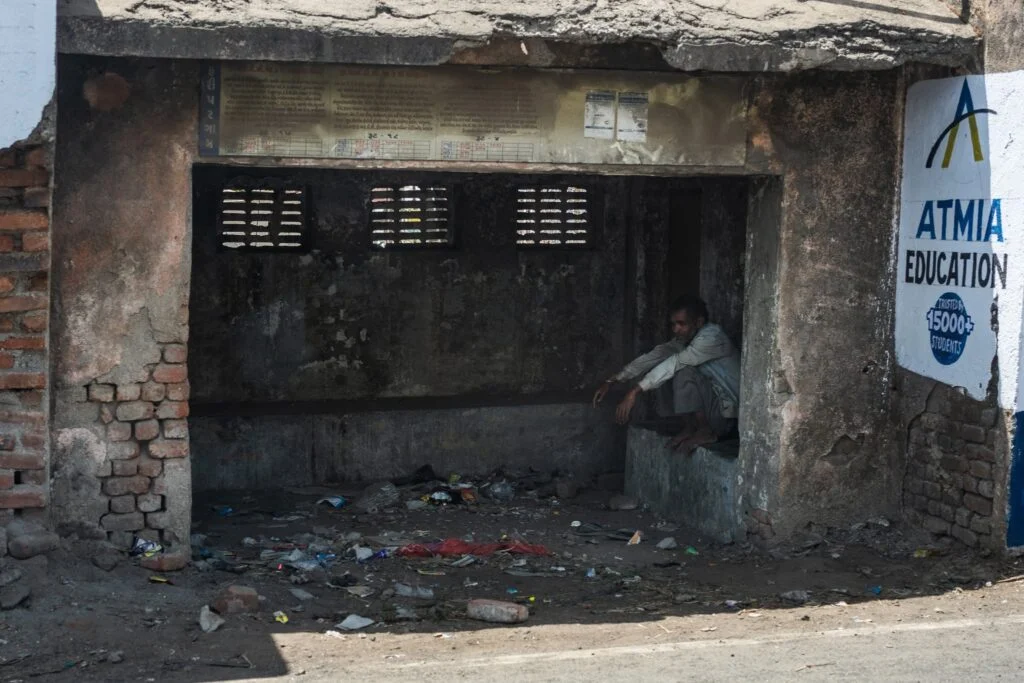
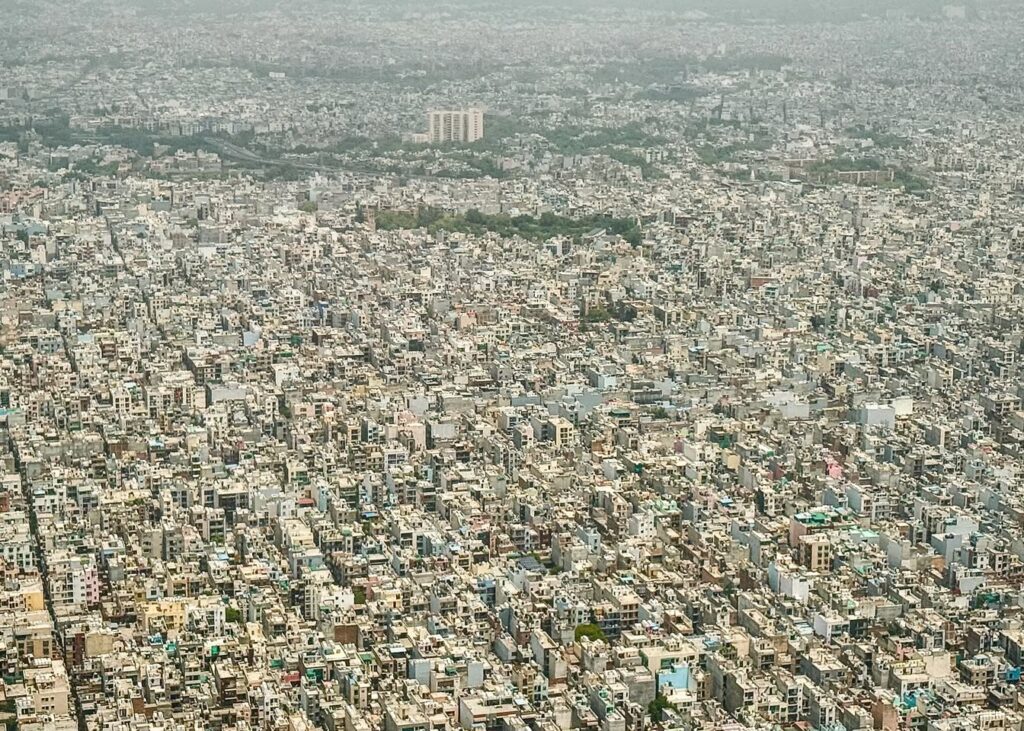
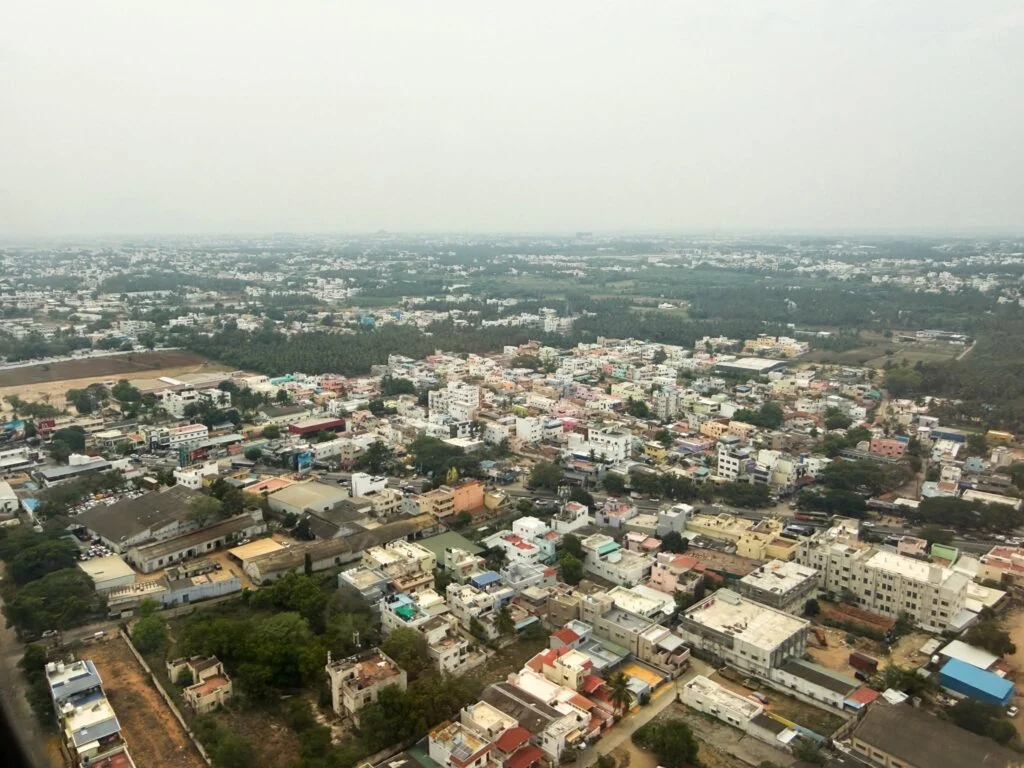
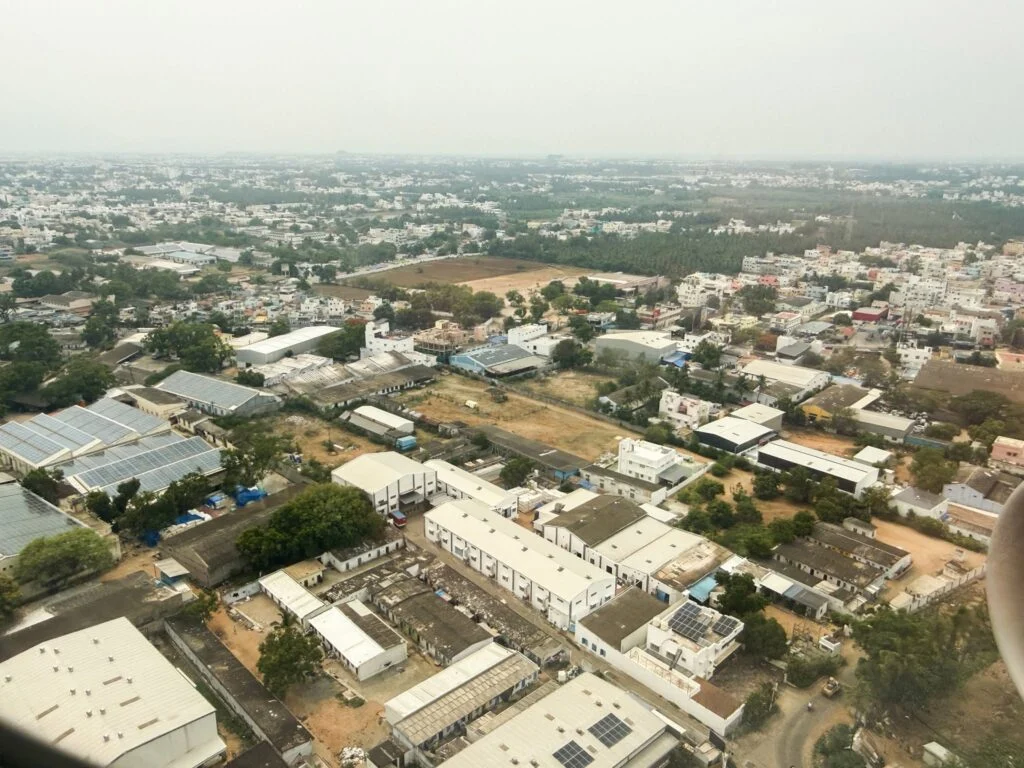
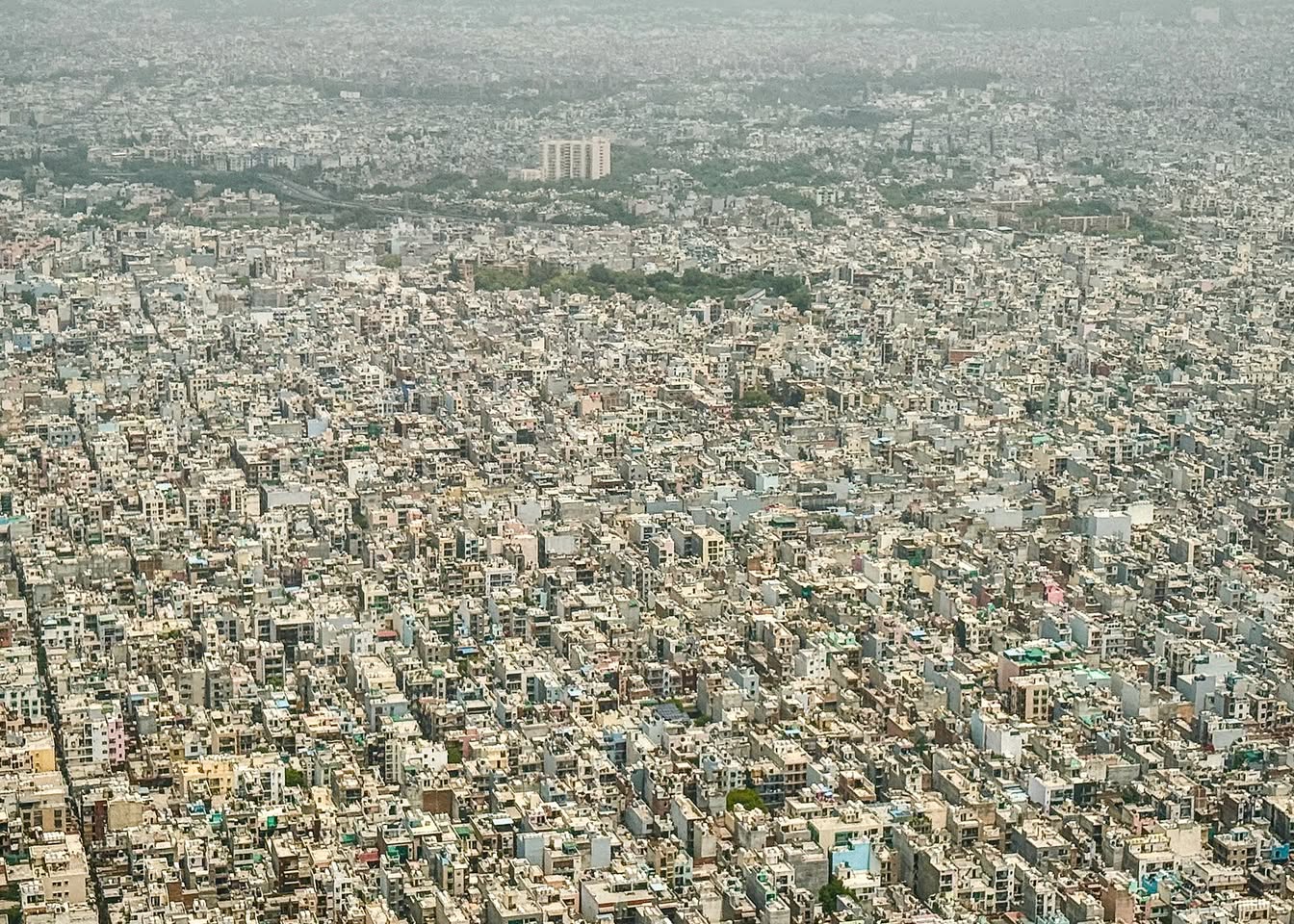
India’s air quality is a spectrum, and it depends on where you are. Coimbatore sits in a Tamil Nadu valley and has relatively moderate air for a city its size. Pune varies — it’s large, it’s growing fast, and you notice the difference between certain parts of the city. Rajkot, in Gujarat’s industrial belt, has genuinely hazy days. None of this means you need an N95 for the whole trip. But if you have any respiratory sensitivity, or you’re spending time around industrial facilities, keep a few KN95s in your bag. Most days I didn’t pull one out. A few days I was glad they were there.
If you’ve never spent time in a city with real air pollution before, the visual haze and the slightly different smell can catch you off guard the first time. It’s not dangerous in short exposures. It’s just something you adapt to, and knowing to expect it makes it a non-event instead of a shock.
Traffic and Getting Around
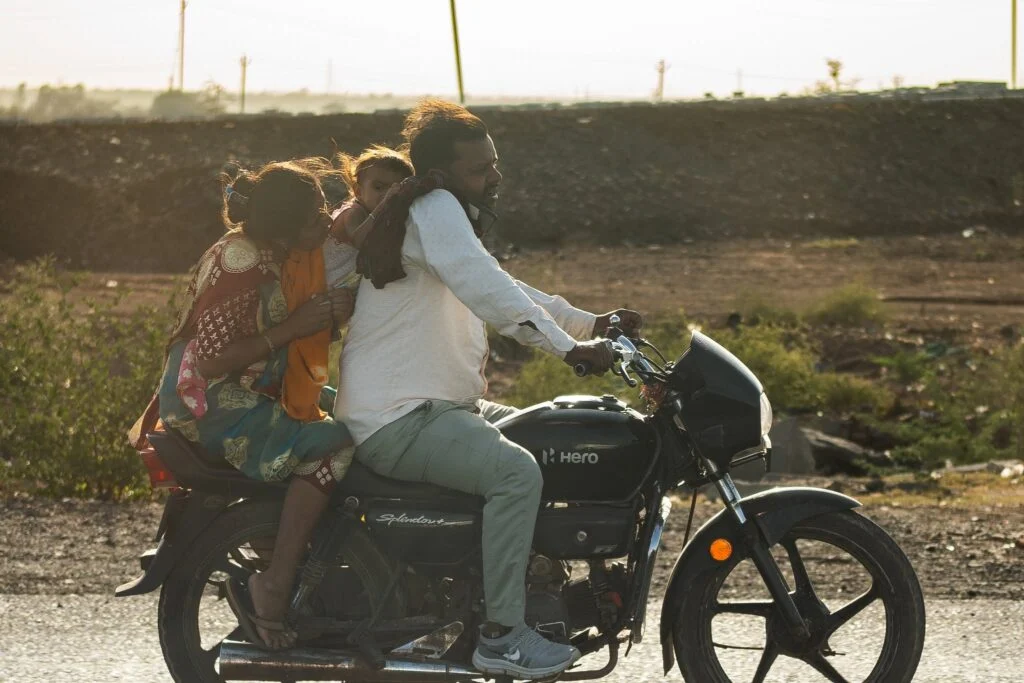
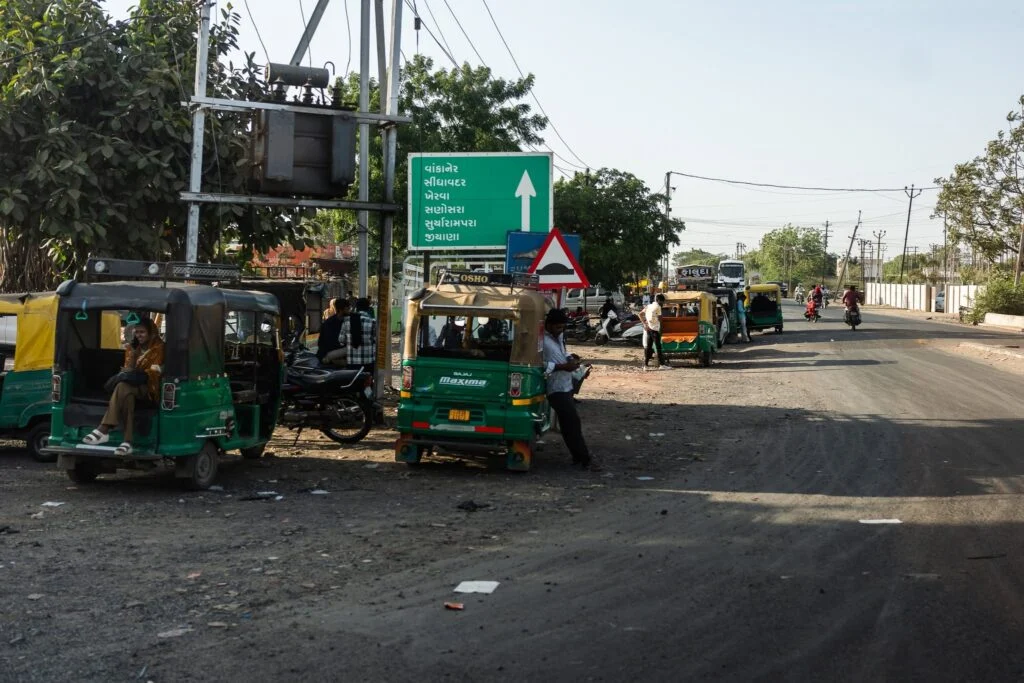
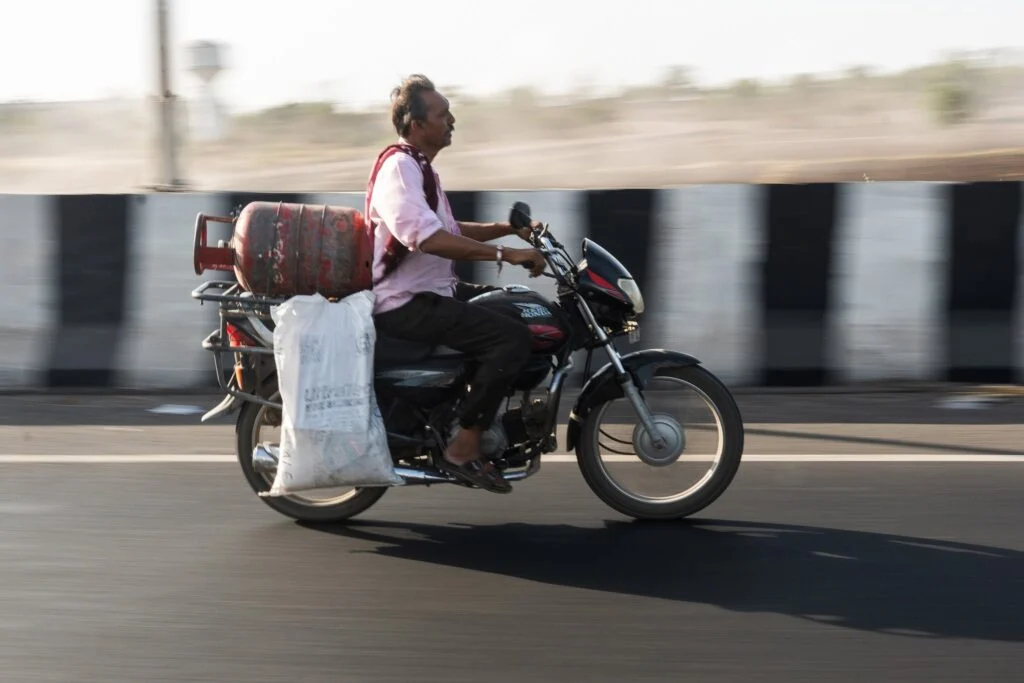
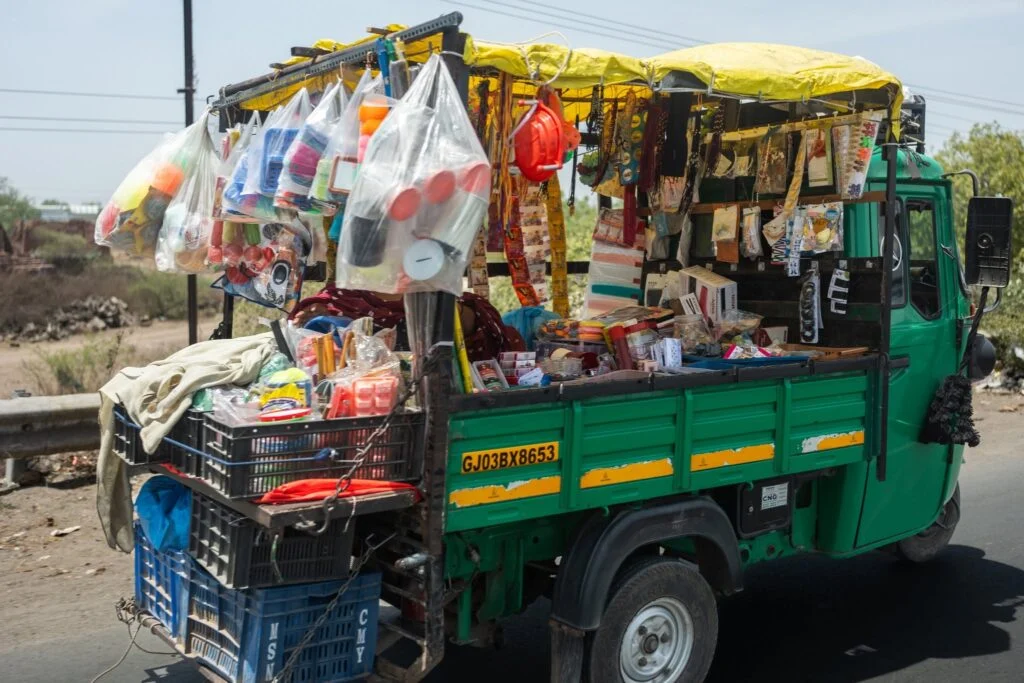
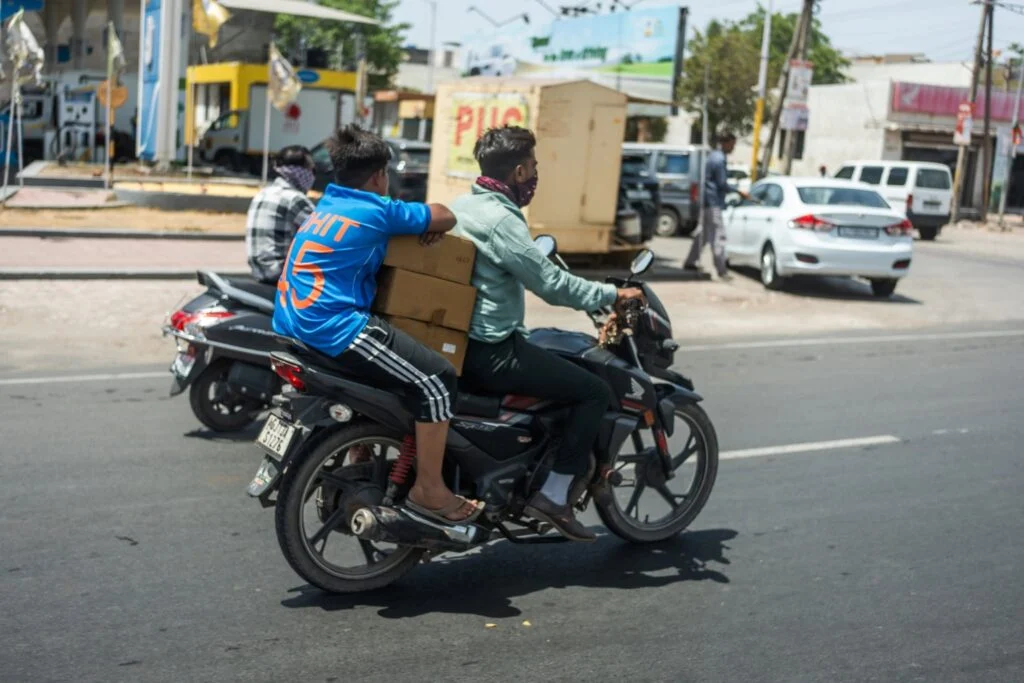
India’s traffic is genuinely unlike anywhere else, and it will break your schedule if you treat it like it’s going to behave. Lane discipline in Pune is somewhere between flexible and fictional. Coimbatore is more manageable. Rajkot runs on its own rhythms. All three cities will add meaningful time to any ground transport you plan, and Google Maps is optimistic by default.
Use Ola or Uber rather than unmarked taxis. Both apps work well across Indian cities, pricing is transparent, and you have a record of your driver and route. Haggling with an unmarked cab at the hotel entrance when you’re already running late for a factory visit is the wrong morning. The apps eliminate that entirely.
On timing: if the app says 20 minutes, budget 35. If it says 45, budget an hour. Build that buffer into your schedule before you get there, not after you’ve already missed the window. And talk to the hotel concierge about first-day logistics — they know which routes choke at which times, and their car service recommendation is worth more than anything you’ll find on your own.
What to Wear (And Why It Matters More Than You Think)
India is hot. Coimbatore runs warm year-round, being in the south. Rajkot and Pune have more seasonal variation, but if you’re traveling in the warmer months you’re dealing with real heat that most Western travelers underestimate until they’re standing on a factory floor at noon.
Breathable fabrics — linen, light cotton, fast-dry synthetics. Nothing wool, nothing heavy, nothing you’d pack for an Atlanta November. For the professional side of things, India’s business culture is generally conservative, and very casual Western dress reads differently there than it does here. You don’t need to overdress, but well-fitted light cotton pants and a collared shirt covers every situation you’ll encounter, whether that’s a factory floor, a client office, or dinner. That’s basically the whole wardrobe equation.
One more thing on footwear: bring shoes you can slip off without ceremony. At some business sites and at many homes, you remove shoes at the entrance. It’s not a big deal once you’re used to it, but arriving in lace-up dress shoes you have to sit down and untie every time gets old fast.
Business Meetings Work Differently
If you’re going to India for work, the single most useful adjustment you can make is recalibrating your expectations for how meetings start. The first chunk of a business meeting — sometimes a significant chunk — is personal. Family, your impressions of India, how the trip is going. It’s not small talk in the Western sense of something you power through to get to the agenda. It’s how trust gets built, and trying to push past it to the business conversation reads as impatient and doesn’t land well. Settle in. The work comes after.
The head wobble is the other thing that gets first-time visitors. The Indian side-to-side head rock means something close to “yes,” “I understand,” or “I’m with you.” A lot of Westerners misread it as confusion or disagreement on first encounter. It’s the opposite — once you recognize it as a positive acknowledgment, you’ll see it constantly and it’ll start to feel natural.
On the practical side: bring business cards. They’re still very much in use. Present and receive them with both hands or your right hand, and don’t immediately stuff a received card into your pocket — look at it, acknowledge it, set it on the table if you’re in a meeting. It’s a small thing that signals you’re paying attention.
Power Adapters and Getting Connected
India uses Type D and Type C plugs running on 220-240V, so your US plugs don’t fit and your voltage is different. Check your devices for “100-240V” on the label — most modern laptops, phones, and camera chargers are dual-voltage and just need an adapter for the plug shape. The Anker Nano travel adapter and the Baseus 70W universal adapter both work well. Business hotels often have a mix of outlet styles, but I wouldn’t count on your specific room having what you need. Bring the adapter regardless.
For a SIM, get one at the airport on arrival. Airtel and Jio are the two most reliable national carriers, and airport kiosks have options set up specifically for foreign visitors. A local data SIM is dramatically cheaper than US carrier international roaming, and connectivity in Indian cities is genuinely solid — better than you might expect.
A Few Other Things Worth Saying
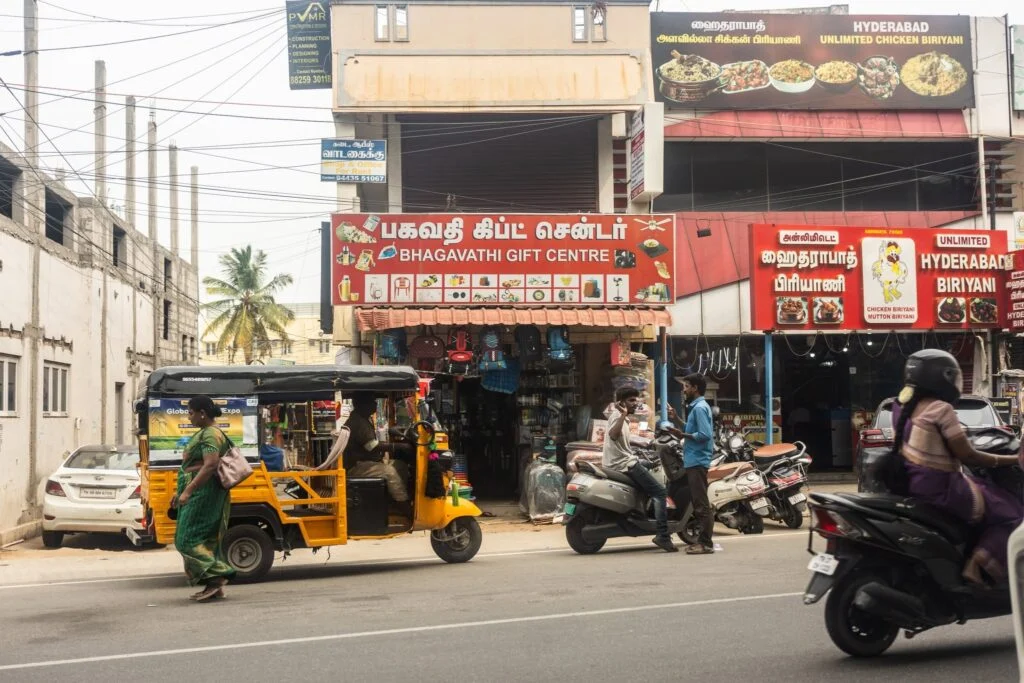
Carry cash. India is not uniformly a tap-and-pay country, and a lot of smaller restaurants, auto-rickshaws, and local shops are cash only. ATMs exist in cities, but having rupees in hand from the start removes a category of friction entirely.
For managing the multiple flight legs — the long international connection plus the domestic hops between cities — Flighty Pro has consistently told me about gate changes and delays before the airline’s own app got around to it. On a multi-leg India trip where missing a domestic connection has real consequences, that early warning matters.
Sleep is worth taking seriously. Long-haul travel from the US East Coast to India is 14-20 hours of transit depending on your connection, and the time difference is 9.5 hours — India Standard Time runs year-round with no daylight saving adjustments. You land in a full-schedule work trip already behind on sleep. Hotel HVAC is inconsistent and often loud. A portable white noise machine sounds like a small thing until it’s the difference between sleeping and not sleeping.
[Dreamegg Portable White Noise Machine — check current price on Amazon]
The Second Trip Is Easier. So Is the Third.
The first time I went to India, I was adapting on the fly — figuring out the food, the logistics, the pace of things. The second trip, I was adjusted by day two. The prep I’d done, the mental model I’d built, the gear decisions I’d locked in — all of it meant I could actually show up and focus on the work instead of spending energy on the basics.
That’s the real point of all of this. None of it is about being overly cautious or treating India like a place to survive. It’s about building the right habits and the right kit so the friction disappears and you can actually be present when you’re there. Because the country itself — the food when you make smart choices, the culture, the completely different pace of things — is genuinely worth paying attention to.
A third trip is already on the calendar. The prep gets shorter every time.
Have questions about traveling to India for work or as a first-timer? Drop them in the comments below.
This article contains affiliate links. If you purchase through these links, I may earn a small commission at no additional cost to you. I only recommend gear I’ve personally used and tested.e links, I may earn a small commission at no additional cost to you. I only recommend gear I’ve personally used and tested.