
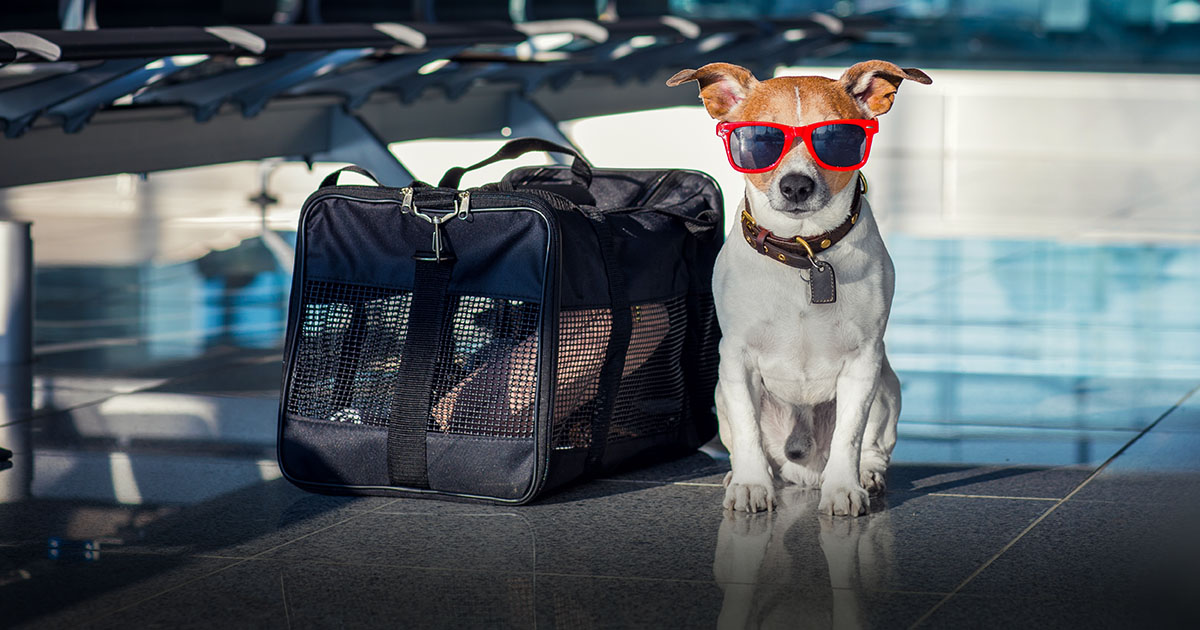
Look, traveling with a pet isn’t complicated. But it is unforgiving. Show up without the right paperwork and they’ll turn you away at the gate. Use the wrong carrier and your dog becomes a 60-pound projectile in a 35 mph fender-bender. Skip the GPS tracker once and you’ll spend three frantic hours searching a highway rest stop for a spooked terrier.
I’ve made most of these mistakes — or watched someone else make them — and the pattern is always the same. They waited too long, bought whatever was on sale, and assumed the airline would be flexible. None of those assumptions held.
The rules have tightened. The gear has gotten better. And the cost of getting it wrong has never been higher.
Here’s everything you need — paperwork, airline policies, tested gear, hotels, seasonal pitfalls, and a full pre-trip checklist — so you can stop guessing and start moving.
Jump to What You Need
- The Paperwork
- TSA Checkpoint Survival Guide
- Which Carrier Is Right for Your Pet?
- Delta Pet Policy 2026
- American Airlines Pet Policy 2026
- United Airlines Pet Policy 2026
- Southwest Airlines Pet Policy 2026
- ESA vs. Service Animals
- Traveling With Birds, Rabbits & Small Mammals
- Seasonal Travel Warnings
- In-Cabin Carrier Reviews
- Road Trip Safety Gear
- Traveling With Cats
- Pet-Friendly Hotels & Accommodations
- GPS Trackers
- Managing Anxiety
- First Aid Kit
- FAQ
- Master Pre-Trip Checklist
- Complete Shopping List
The Paperwork: Get This Right Before You Do Anything Else
This is the part that kills trips before they start. Bureaucracy doesn’t care that your flight is in six hours.
Bringing a Dog Into the U.S.
The CDC requires a Dog Import Form for every dog entering the country. No exceptions. If your dog has been living in a low-risk or rabies-free country for the last six months, the form is your primary CDC document — fill it out online, get the email receipt, and show it at the gate and customs.
Coming from a high-risk rabies country? You need a U.S.-issued rabies vaccination certificate and you can only enter through specific pre-approved ports with quarantine facilities. That’s a completely different logistical problem to solve well in advance.
As of February 5, 2026, the CDC updated the web system for this form — the underlying requirements didn’t change, but the digital receipt formatting did. Make sure you’re using the current portal.
Taking Your Pet Out of the U.S.
You need an International Certificate of Veterinary Inspection, issued by a USDA-accredited vet and endorsed by USDA APHIS. The system that handles this is called VEHCS — a digital portal that lets your vet input microchip data, vaccination records, and exam results directly, so APHIS can endorse it digitally instead of routing physical documents through the mail.
Here’s where people get burned: the timing is brutally rigid. Take Georgia (the country, not the state) as an example — the health certificate is only valid for 10 days from the vet’s issuance date, and APHIS has to fully endorse it before you fly. Layer in that some countries require parasite treatments within a specific pre-departure window, and suddenly you’re coordinating a vet appointment, federal endorsement processing time, and a flight itinerary like a military operation.
Don’t leave this until the week before you leave. Start six to eight weeks out.
Georgia (U.S. state) travelers: APHIS has a regional Veterinary Export Trade Services office at the Lawrenceville Service Center for in-person help with complex export scenarios.
Domestic Travel
Every state is different, but airlines and most destination states want a Certificate of Veterinary Inspection (CVI) issued within 30 days of travel. It confirms your animal is healthy, disease-free, and current on rabies vaccination. Get this from your vet as the last step before you leave — not two months out.
If you’re based in the Atlanta metro, Fulton County requires pet licensing (one-year or three-year terms tied to your rabies vaccine validity). Non-compliance doesn’t ground your trip, but it creates problems if anything goes sideways during travel.
The Day of: TSA Checkpoint Survival Guide
Here’s what most people don’t know — the TSA evaluates your pet, the carrier, and you as three separate security items. The carrier goes through the X-ray machine. The pet does not.
The Actual Protocol
- Animal must be in a secure, ventilated, leak-proof carrier before you approach the checkpoint.
- Remove your pet from the carrier before the conveyor belt. The carrier goes through X-ray; your pet cannot.
- Put on a harness and non-retractable leash before you do this. Airports are loud, chaotic, and full of escape routes — a scared dog or cat in a terminal is a nightmare.
- Walk through the metal detector together.
- A TSA officer will likely swab your hands for explosive residue — standard procedure after manual bag handling.
- Reclip and rehouse your pet in a calm recomposure area away from foot traffic.
If you have a reactive animal or a flight-risk cat, you can request a private screening room. Use it. It removes them from the chaos and reduces the risk of an escape into the terminal.
Real ID and Timing
As of February 1, 2026, showing up without a REAL ID-compliant ID means secondary verification and a $45 fee. When you’re wrangling a stressed animal, every extra minute at the checkpoint is misery for both of you. Get REAL ID compliant, or get TSA PreCheck — some airports like Boston Logan offer touchless ID verification through the program.
One More Thing About Airport Dogs
The TSA runs over 1,000 working explosive-detection dogs across the country. You’ll see them. Do not let your pet interact with them. These are working animals doing a high-stakes job. Keep your animal controlled and moving.
Which Carrier Is Right for Your Pet? (Decision Guide)
Before you spend $80–$200 on a carrier, run through this. Most returns in this category happen because someone skipped this step.
IS YOUR PET FLYING OR DRIVING?
│
├── FLYING
│   │
│   ├── Does your pet weigh under 20 lbs (pet + carrier combined)?
│   │   ├── YES → In-cabin is an option. Continue below.
│   │   └── NO  → Cargo only (if airline allows) or drive.
│   │
│   ├── Which airline?
│   │   ├── Southwest → Max carrier height is 9.5". Look at Sleepypod Air
│   │   │               (compressed) or the Southwest branded carrier.
│   │   ├── American  → 20 lb hard limit enforced at scale. Every ounce counts.
│   │   │               Lightest option: Away Pet Carrier (4.3 lbs).
│   │   ├── Delta/United → More forgiving. Focus on comfort + versatility.
│   │   │                  Sleepypod Air or Sherpa Original Deluxe.
│   │   └── Multiple carriers → Get the Sleepypod Air. It compresses to fit
│   │                           different under-seat dimensions.
│   │
│   └── Is your pet anxious or a confirmed escape artist?
│       ├── YES → Tavo Dupree (rigid shell, enclosed) or Sleepypod (privacy shield).
│       └── NO  → Sherpa Original Deluxe for budget. Away for lightweight premium.
│
└── DRIVING
    │
    ├── Small pet in the back seat?
    │   ├── Dog → CPS-certified harness (Sleepypod Clickit or Saker Bomber).
    │   └── Cat → K&H Travel Safety Carrier anchored to seatbelt.
    │
    └── Larger dog in cargo area / SUV?
        ├── Best overall → Gunner Kennel G1 with strength-rated anchor straps.
        ├── Budget option → Lucky Kennel with Lucky Ratchet Strap Kit.
        └── Weight-saving → Rock Creek Crate (aluminum).
Flying: What Every Major Airline Actually Allows in 2026
Airlines set their own rules, entirely independent of federal TSA guidelines. These policies change seasonally and by route. The table gives you the baseline — the sections below give you the catches that aren’t in the fine print.
| Airline | In-Cabin Fee (One-Way) | Max Soft Carrier Dims | Weight Limit | Cargo Option |
|---|---|---|---|---|
| Delta | $130–$150 | 18″ × 11″ × 11″ | No strict limit; must fit comfortably | Yes, via Delta Cargo (weather embargoes apply) |
| American | $125–$150 | 18″ × 11″ × 11″ | 20 lbs max, pet + carrier combined | Yes, via PetEmbark |
| United | $150 | 18″ × 11″ × 11″ | No strict limit; must fit comfortably | Active military/State Dept. only |
| Southwest | $125–$150 | 18.5″ × 13.5″ × 9.5″ | No strict limit; must fit comfortably | Not available. Period. |
The industry-wide rule: your pet stays in the carrier, door zipped, stowed under the seat in front of you, from boarding to deplaning. No exceptions, no matter how much they cry.
Delta Air Lines Pet Policy 2026
Delta allows two pets to share one carrier — same species, same size, both under 6 months old and under 20 lbs each. International flights require ventilation on all four sides, not just three. Soft-sided carriers are the standard; the 18″ × 11″ × 11″ dimension flexes well across Delta’s diverse fleet.
The rule that catches people: if your pet gets loose in a boarding area, a Delta Sky Club, or onboard, Delta can permanently revoke your pet travel privileges. This isn’t a warning — it’s happened to travelers who thought a quick “stretch” outside the carrier at the gate was harmless.
Delta Cargo accepts pets in hard-sided kennels with temperature-based embargoes. When summer heat is a factor, check the embargo calendar before booking cargo.
American Airlines Pet Policy 2026
American is the strictest of the four on weight. That 20-pound combined limit — pet plus carrier — is enforced at check-in with a scale. If you’re close to the limit, weigh everything at home before you get to the airport.
They cap total carriers per aircraft based on plane type. An Airbus A321NEO allows up to 20 carriers. A regional ERJ-145 may allow as few as five. If you’re on a connection with a regional leg, that second flight could get your pet bumped.
No under-seat pets in First Class — lie-flat seating doesn’t accommodate it. Business Class accepts soft-sided only.
For larger animals, PetEmbark is American’s cargo service. Under 100 lbs domestically goes via Priority Parcel Service (PPS). Larger or international animals use ExpediteFS. The AVMA cautions against heavy sedation for cargo — altitude changes create real cardiovascular risk, and American actively prohibits heavy tranquilization for cargo pets.
United Airlines Pet Policy 2026
United charges a flat $150 per direction — no fluctuation. There’s no rigid weight number, but the animal must be able to stand, turn around, and lie down comfortably in the 18″ × 11″ × 11″ carrier. If it can’t, they’ll deny boarding.
The cargo situation at United is essentially closed to civilians. Checked pets are only accepted from active-duty U.S. Military and State Department Foreign Service personnel on official government reassignment orders. If you have a large dog and you’re not military, United is an in-cabin-or-nothing situation — which means if your pet doesn’t fit under the seat, you need a different airline or a different plan.
Southwest Airlines Pet Policy 2026
Southwest’s 737 seat architecture creates a tighter under-seat clearance than legacy carriers, which is why the height limit drops to 9.5″. That half-inch matters. Many carriers that work on Delta or United will not clear Southwest’s seats.
Southwest sells their own branded carrier designed specifically for this clearance. It’s not the best carrier on the market, but it will fit — which is the whole point.
Max six pet carriers per flight. Book the pet fare the same day you book your ticket. Don’t wait.
The only upside unique to Southwest: the pet fare is fully refundable if you cancel your reservation or if the flight is severely delayed. Every other major airline keeps the pet fee regardless of what happens to the flight.
Southwest does not offer cargo or checked pet service under any circumstances.
Emotional Support Animals vs. Service Animals: What Actually Changed
This causes more airport confusion than almost anything else in pet travel, and the regulatory shift from a few years ago is still not widely understood.
The short version: ESAs lost their airline cabin protections. Service animals kept them.
The DOT rule that took effect in 2021 — and has been in full enforcement since — removed the requirement for airlines to accommodate emotional support animals as service animals. ESAs are now treated the same as regular pets by every major U.S. carrier. That means:
- ESAs pay the same in-cabin pet fee as any other pet
- ESAs must fit in an approved carrier under the seat
- ESAs are subject to the same weight limits and carrier dimension rules
- ESAs are not allowed to sit in your lap or occupy a seat
Psychiatric Service Dogs (PSDs) are different. A PSD is a dog — specifically a dog, not another species — that has been individually trained to perform a specific task related to a psychiatric disability. “Comfort” and “emotional support” do not qualify as trained tasks. The dog must perform a defined, trainable behavior in response to a specific disability symptom.
If you have a legitimate PSD, you can fly with that dog in the cabin at no charge, with advance documentation. Every airline has its own form — typically the DOT Service Animal Air Transportation Form — submitted at least 48 hours before departure.
What documentation doesn’t do: A purchased ESA letter, a vest from Amazon, and a patch that says “Service Dog” do not create a legal service animal. They create a problem at the gate. Airlines have seen every version of this, and their gate agents are trained to ask very specific questions about what task the animal performs.
If your dog is a genuine, task-trained PSD, get your documentation in order early and contact the airline directly before you fly. If your dog is an emotional support animal that keeps you calm, budget for the standard pet fee and get the right carrier.
Traveling With Birds, Rabbits, and Small Mammals
Dogs and cats dominate the conversation, but a significant portion of travelers have birds, rabbits, guinea pigs, hamsters, or ferrets — and the airline rules for these animals are almost universally more restrictive. Here’s the actual landscape:
Birds
Delta, United, and American all accept small household birds in the cabin on domestic routes — no exotic birds, no birds traveling internationally (CITES regulations and agricultural import restrictions apply). The bird must stay in an appropriate carrier under the seat for the duration of the flight.
Southwest does not accept birds in the cabin.
The carrier must be escape-proof and prevent feathers, dander, and droppings from contaminating the cabin. A finch in a cotton travel bag is a denial. A parakeet or small parrot in a rigid, ventilated cage that fits under the seat is generally acceptable.
For international travel with birds, you’re entering a completely different regulatory world. CITES (Convention on International Trade in Endangered Species) documentation is required for most parrots and many other species. Research the specific requirements for your destination country six to eight weeks out — some countries have blanket bans on bird importation.
Rabbits
Most major carriers do not accept rabbits in the cabin. This is a blanket restriction, not a size or carrier issue — it’s an agricultural and allergy classification issue. Rabbits are typically accepted only as cargo, and cargo acceptance varies by airline, season, and temperature.
For road trips, rabbits travel well in secure hard-sided carriers with adequate ventilation. Keep the carrier out of direct sunlight; rabbits overheat faster than dogs or cats and have no effective panting mechanism. Temperature above 85°F in the carrier environment is a serious risk.
Guinea Pigs, Hamsters, and Small Rodents
Policies vary dramatically by carrier. American Airlines does not accept small rodents in the cabin. Delta and United policies restrict acceptance to specific scenarios. The short answer: call the airline directly and confirm in writing before you book.
For road trips, small rodents stress acutely from vibration and temperature swings. Keep the carrier stable, avoid direct air conditioning vents blowing directly on the animal, and minimize handling during transit.
Ferrets
Ferrets are banned from in-cabin travel on most U.S. domestic carriers and from entry into several U.S. states entirely. Hawaii and California have specific prohibitions. If you’re traveling with a ferret, verify legality at your destination before you get to the airport.
Seasonal and Route-Specific Warnings: The Stuff That Blindsides People
Summer Cargo Embargoes
This is the single most common reason people arrive at an airport with a large dog in a kennel and get turned away.
Most airlines impose temperature-based cargo embargoes from roughly late May through mid-September. When ground temperatures exceed certain thresholds — typically around 85°F at origin, connection, or destination — the airline suspends cargo pet transport entirely. No exceptions. No refunds on the cargo fee in many cases.
The specifics vary:
- Delta Cargo publishes embargo dates based on forecasted temperatures at each city pair. Check within 48 hours of departure, not just when you book.
- American PetEmbark follows similar temperature protocols and adds humidity thresholds.
- United only accepts military cargo pets, so this is largely moot for civilians, but the same risks apply.
If you’re moving a large dog in summer, ground transport — a pet transport service or driving — is often the only reliable option.
High-Altitude Destinations
Flying to Denver, Aspen, Albuquerque, or any high-elevation destination amplifies the risks for brachycephalic breeds. Cabin pressure is already equivalent to roughly 8,000 feet. Landing at an airport already at 5,000+ feet and then driving to a higher elevation creates cumulative respiratory stress that flat-nosed breeds genuinely cannot manage. If your Frenchie or Pug is accompanying you to a mountain destination, drive and ascend gradually. Your vet can advise on acclimatization.
This also affects senior dogs and any animal with pre-existing cardiac or respiratory conditions.
Airports That Are Notoriously Difficult for Pet Travelers
Not all airports handle the pet screening process with equal grace. A few worth knowing:
LaGuardia (LGA) — Tight terminals, heavy foot traffic, and limited quiet recomposure space near checkpoints make this a high-stress environment for animals. Add buffer time and request private screening proactively.
O’Hare (ORD) — The international terminal has more structured pet handling, but domestic terminals are chaotic. Connecting through O’Hare with a pet in summer adds embargo risk if you have a cargo animal.
Any small regional airport — The flip side of the difficult-hub problem. Smaller airports often have lower pet-carrier capacity on regional jets and fewer resources if something goes wrong. Confirm carrier slots are available on regional legs before you finalize booking.
Winter Travel
Cold weather embargoes mirror the summer ones, but in reverse. When temperatures drop below certain thresholds at cargo holds, airlines restrict transport. Short-nosed breeds are again at elevated risk — they’re susceptible to cold-induced respiratory distress just as they are to heat.
For in-cabin travel in winter, the main issue is the tarmac wait. Cold ramp exposure during boarding and deplaning stresses animals. Keep the carrier covered until you’re inside the jetway.
The Gear: What’s Actually Worth Buying
The pet carrier market is flooded with products that look great in photos and fall apart in real life. Here’s how to filter the noise.
How They Test This Stuff
The Center for Pet Safety (CPS) is the only testing organization that matters. They’re a 501(c)(3) nonprofit that refuses manufacturer funding to stay objective. They run actual crash simulations at an NHTSA-contracted lab using an instrumented crash test dog.
What they’re measuring:
- Excursion distance — how far the animal flies forward on impact. Limit is 32″ for small/medium, 36″ for large.
- Hardware migration — how far zippers, clips, and webbing slip under load. Millimeter tolerances.
- Structural integrity — whether D-rings, buckles, and frames survive the impact or shatter.
A 60-pound dog in a 50 mph crash generates over 3,000 pounds of force. A broken zipper turns your pet into a projectile. CPS certification isn’t a marketing badge — it’s the only evidence that the product was actually tested.
Note: CPS actively revokes certifications when manufacturers change materials without notification. Always verify current certification status at centerforpetsafety.org before purchasing — the Gen7 Commuter Carrier had its certification revoked after material changes, and outdated review articles still recommend it.
In-Cabin Carriers: The Best Options Right Now
Best for Anxious Pets: Tavo Dupree Carry-On Pet Car Seat
Built to the UN ECE R129 child restraint standard. Side impact protection with Tailor tech memory foam. Steel-reinforced ISOFIX latches for vehicle anchor bars. Goes from car to terminal with one hand. The rigid shell gives anxious animals a “den” feeling instead of a sagging bag. This is the carrier for the pet that’s a wreck in transit.
Who it’s for: Anxious small dogs and cats that derive comfort from a firm, enclosed structure rather than a flexible bag. Also ideal for pet owners who move between car and plane on the same trip.
Best Lightweight CPS-Certified: Away The Pet Carrier
4.3 pounds. CPS 5-Star certified. Retractable privacy screen for busy terminals. Water-repellent sherpa interior. Dedicated waterproof side pocket with drainage for a wet collapsible bowl. Trolley sleeve for stacking on rolling luggage.
Who it’s for: Design-conscious frequent flyers who are close to the 20-lb airline limits and need the lightest possible carrier that’s still actually tested.
Best Budget/Frequent Flyer: Sherpa Original Deluxe
The industry default. Gate agents across the country use Sherpa dimensions as their mental baseline for under-seat approval. The spring-wire frame lets the rear compress to fit sloped under-seat spaces. Backed by a “Guaranteed On Board” program that reimburses you if the carrier’s size gets you denied.
Who it’s for: Short-haul domestic flyers, budget-focused buyers, and pets that are already comfortable with travel and don’t need heavy structural reinforcement.
Best for Adaptability: Sleepypod Air
Expands to 22″ for max pet comfort, compresses to 16–19″ to satisfy strict airline length limits during takeoff and landing. CPS certified. Automotive seatbelt straps included. Deployable privacy shield.
Who it’s for: Travelers who fly on a rotating cast of aircraft — this carrier physically morphs to fit unpredictable under-seat dimensions. If you’re regularly on Southwest and United, this is the answer.
Best for Heavier Small Pets: Roverlund Out of Office Pro
Marine-grade rope handles. Heavily reinforced stitching. Waterproof base. Darker mesh that limits visual stimulation. Built specifically for the 18-to-20-pound range where standard soft bags start bowing at the seams.
Who it’s for: Pets approaching airline weight limits that need a floor that won’t sag and handles that won’t snap under load during a long terminal walk.
Best Sustainable/Premium: Dagne Dover Kyoto (~$158)
100% GRS-certified recycled 900D polyester. Vegan materials. Performance Air Mesh ventilation. Organized exterior pockets for treats, leashes, and travel documents. Trolley sleeve.
Who it’s for: Frequent flyers who want a carrier that looks like premium luggage, not a pet store bag, without sacrificing function.
Vehicular Travel: Road Trip Essentials and Crash-Tested Gear
An unrestrained 60-pound dog in a 50 mph crash hits like 3,000 pounds of force. It will kill itself and can kill you. This is physics, not hyperbole.
Unlike child car seats, pet products aren’t federally regulated. Anyone can print “safety tested” on a box. CPS certification is the only standard worth trusting.
CPS-Certified Crates
| Product | Key Feature |
|---|---|
| Gunner Kennel G1 (Small, Medium, Intermediate) | Double-wall rotational molding; first kennel to earn CPS 5-Star; requires strength-rated anchor straps |
| Lucky Kennel Series (Medium, Intermediate, Large) | Requires Lucky Ratchet Strap Kit for certification compliance |
| Rock Creek Crate (Medium Aluminum) | Aerospace-grade aluminum; lightest rigid option; anchor straps required |
The Gunner is the benchmark. It’s been dropped off 200-foot cliffs, shot with shotguns, and subjected to 4,000 pounds of crushing pressure. When properly strapped in, it keeps the dog inside and protects it from frame collapse. Nothing else in the category comes close.
CPS-Certified Harnesses
Warning: Cheap tether products and zipline-style backseat restraints have been flagged by CPS for causing spinal trauma and decapitation in crashes. Don’t use them.
The only two harnesses with verified CPS certification in 2026:
- Sleepypod Clickit Series (Sport, Terrain, Range) — Three-point design distributes crash forces across the dog’s chest.
- Saker Canine Bomber Harness — High-tensile webbing, strict excursion limits.
Both integrate directly with your vehicle’s seatbelt system. That’s the mechanism. That’s why they work.
Feline-Specific Travel Gear: Comfort and Containment
Cats aren’t dogs in smaller bodies. Removing them from their environment triggers a specific, measurable stress response — hyperventilation, vocalization, GI distress. The gear strategy is completely different.
Cats need sensory isolation, not visibility. Darker mesh, enclosed spaces, minimal visual chaos.
Top Feline Carriers
Petmate Two Door Top Load Kennel — Hard plastic (easy to sanitize), dual access so you can lift a defensive cat out from the top instead of dragging it through a front portal. Significantly reduces scratching incidents during extraction. Best for vet visits and in-cabin flights.
K&H Pet Products Travel Safety Carrier — Flat back sits flush against the car seat. Anchors directly into the seatbelt. Prevents tilting and swinging during turns, which dramatically reduces motion sickness. Best for road trips.
The Litter Box Problem
Most people don’t think about this until they’re in a hotel bathroom with a standard litter box that takes up half the floor. Don’t improvise.
| Product | Best For |
|---|---|
| Pet Fit Collapsible Box | Extended road trips; waterproof, wipe-clean |
| Kitty’s WonderBox | High-turnover trips; fully disposable, biodegradable |
| Petleader Collapsible Box | Multi-day vehicle transit; holds 30 lbs of litter |
| Necoichi Portable Box | Kittens and tight spaces; snaps flat for storage |
Cats that refuse to eliminate in an unfamiliar setup can develop urinary tract blockages — a genuine medical emergency that will cost you $2,000+ at an emergency vet. Get the right equipment. Use your cat’s regular litter. Establish the habit at home with the travel box before you go.
Pet-Friendly Hotels and Accommodations: What You Actually Need to Know
This section gets skipped in most gear guides, and it shouldn’t. The carrier that got you to the hotel means nothing if the property charges you a $300 non-refundable pet fee and your dog barks through the wall at 2am.
Booking Platforms Worth Using
BringFido — The most complete pet-friendly hotel database. Filters by pet size, breed restrictions, and whether fees are refundable. Also lists pet-friendly restaurants and parks at the destination, which saves real research time.
Hipcamp — Best for road trips. Connects travelers with private landowner campsites, farms, and outdoor stays where pets are genuinely welcome rather than technically permitted. Better for animals that need space.
Airbnb’s pet filter — Useful but inconsistent. Read individual host reviews specifically for mentions of pets before booking. What the listing says and what the host expects are sometimes different.
Decoding Pet Fees
The “pet-friendly” label covers a wide range of policies. Know what you’re actually agreeing to:
- Non-refundable pet fee — Charged regardless of condition. Standard at most hotels, ranges from $25–$150/night or as a flat stay fee.
- Refundable pet deposit — Returned if no damage. Less common. Ask explicitly whether the fee is a deposit or non-refundable.
- Pet cleaning fee — Some properties charge this in addition to a pet fee. The math adds up fast.
- Weight and breed restrictions — Common at urban properties. Pit bull mixes, Rottweilers, and German Shepherds are frequently excluded even when the hotel claims to be pet-friendly. Verify before booking, not at check-in.
Managing the Barking Problem
A dog that’s fine at home can become a liability in a hotel room — new smells, noises through walls, unfamiliar environment. Here’s what actually helps:
Bring your dog’s regular bed or a worn piece of your clothing — familiar scent is a genuine behavioral anchor. Crate the dog when you leave the room, even briefly. A dog that’s crated in their travel kennel is contained; a dog that’s loose in the room is a housekeeping incident waiting to happen.
If barking is chronic or situational anxiety is severe, talk to your vet before the trip. There are fast-acting prescription options specifically for situational use that won’t leave the dog sedated for the full stay.
Leave the TV or white noise on. It masks hallway sounds that trigger alert barking in many dogs.
What to Pack for Hotel Stays
Beyond your standard gear, hotel stays require a few specific additions: a collapsible travel crate (for when you leave the room), enzyme-based odor spray (one accident on carpet without immediate treatment becomes your problem), waterproof mattress protector if your pet sleeps in the bed, and a doormat or pee pad near the entrance for wet paws.
Do not let your dog on furniture without checking the hotel’s policy first. Some properties charge damage fees for pet hair on bedding. Ask at check-in what their specific policy is and lay down your own waterproof blanket as a buffer.
GPS Trackers: Active Tracking Is Non-Negotiable Now
A microchip is passive — it only helps if someone finds your pet and scans it. An Apple AirTag only works near other iPhones — it’s essentially useless in rural areas where you actually need it.
Active GPS tracking is the standard in 2026.
| Tracker | Network | Weight | Cost | Key Feature |
|---|---|---|---|---|
| Tractive GPS 6th Gen | Multi-carrier cellular | 1.2 oz | $69 + $108/yr subscription | Updates every 2–3 seconds; virtual geofencing |
| Fi Series 3 | AT&T LTE-M | Light | $189 | Extreme durability; optimized battery life |
| Garmin Alpha T 20 | Iridium Satellite | 8.4 oz | $300+ | Fully off-grid; works where there’s zero cell service |
| Whistle Go Explore 2.0 | AT&T LTE-M | 1.2 oz | $129 | Health and activity tracking built in |
| Halo Collar 5 / SpotOn | GPS + Cellular | Varies | Premium | Custom virtual fences, no buried wires |
For most travel — airports, cities, road trips on major routes — the Tractive 6th Gen is the answer. Fast location updates, geofence alerts that push to your phone the second your pet crosses a set boundary, solid coverage.
For backcountry, wilderness, or anywhere cellular is spotty: Garmin Alpha T 20 on Iridium satellite. It costs more and weighs more. It also works when nothing else does.
Set a geofence around every hotel and campsite the night you arrive. The five minutes it takes is worth it.
Managing Travel Anxiety: The Tiered Approach
Don’t go straight to prescription medication. Work through this in order.
Layer 1: ThunderShirt
Deep pressure therapy. Constant gentle pressure on the torso — same principle as swaddling an infant. Clinically proven to reduce panting, pacing, and vocalization without chemical sedation. Start here, use it on every trip, and don’t just pull it out for the worst situations — familiarity with the garment itself reduces stress over time.
Layer 2: Calming Supplements
Administer 30–45 minutes before the stressful event. Look for formulas with these active compounds:
- L-Theanine — promotes relaxed alpha brain wave activity
- L-Tryptophan — serotonin precursor
- Melatonin — regulates sleep cycles
- Chamomile, valerian root, passionflower — synergistic botanical support
Good options: Vibeful Calming Melatonin Peanut Butter chews (dogs that resist pills), Zesty Paws Hemp Elements Calming OraStix (combines anxiety relief with the inherent calming behavior of chewing), VetIQ and Pet Honesty NASC-certified soft chews.
Layer 3: Prescription Medication
When everything else fails, talk to your vet about Alprazolam (Xanax) — a fast-acting benzodiazepine for acute situational panic. It works quickly and blunts the fear response, but dosing precision matters, and it can cause paradoxical excitement in some animals. Do a trial run at home well before the trip.
Critical warning: The AVMA explicitly cautions against heavy sedation for cargo travel. Altitude changes affect heart rate and respiratory function, and a sedated animal in a cargo hold faces significantly elevated cardiovascular risk. Never sedate a brachycephalic breed for any kind of flight.
Emergency First Aid Kit: What Goes in the Bag
When you’re four hours from the nearest emergency vet on a hiking trail, you’re the first responder. Pack these:
| Item | Why It’s There |
|---|---|
| Gauze pads + roll (6–8 pads, 2–3 rolls) | Lacerations, wound coverage, infection barrier |
| Cohesive flexible wrap (2–3 rolls) | Secures gauze without sticking to fur; compression without cutting circulation |
| Digital thermometer (pet-specific) | Detect heat stroke or infection; normal range is 101–102.5°F |
| Needleless syringes, 10cc (2–3) | Flush debris from wounds; administer liquid meds |
| Styptic powder | Stops bleeding from torn nails or minor cuts instantly |
| Sterile saline + eye lubricant | Flush sand, smoke, or debris from eyes |
| Hydrogen peroxide 3% (fresh bottle) | Induce vomiting for toxic ingestion — only under direct vet guidance |
| Karo syrup | Apply to gums for hypoglycemic shock — fast blood sugar elevation |
| Soft nylon muzzle | Even calm animals bite when they’re hurt and panicking |
Pre-research 24-hour emergency veterinary clinics along your entire route and write them down on paper. Don’t assume you’ll have signal to search for one when you need it.
FAQ: Quick Answers to the Questions Everyone Searches
Can my senior dog or flat-faced breed fly? Senior pets have weakened cardiovascular systems and low stress tolerance. Brachycephalic breeds — Pugs, French Bulldogs, Persians — can’t thermoregulate effectively and are at serious risk for heatstroke and hypoxia in flight. Many airlines ban them from cargo. Veterinary consensus: drive if you can.
Does my ESA still get free cabin access? No. As of the 2021 DOT ruling, emotional support animals are treated the same as regular pets on all major U.S. carriers. Standard pet fees, carrier requirements, and weight limits apply. Only trained psychiatric service dogs with specific documented tasks retain in-cabin access rights at no charge.
What’s the cheapest way to fly with a pet? American and Southwest both start at $125 one-way. Southwest’s pet fare is fully refundable; American’s is not. Budget for the fee plus a compliant carrier if you don’t have one — the cheapest carrier that actually fits is typically the Sherpa Original Deluxe (~$50–$60).
Can I bring my bird or rabbit in the cabin? Most major carriers accept small household birds on domestic routes (Delta, United, American — not Southwest). Rabbits are generally restricted to cargo, and cargo acceptance varies by season and temperature. Call the airline directly to confirm before booking.
What happens if my pet doesn’t fit under the seat? They don’t fly. The airline will deny boarding. There’s no negotiation at the gate. This is why you measure your specific under-seat space on your specific flight aircraft before purchasing a carrier, not after.
Do I need a vet certificate for a domestic flight? Airlines technically require a Certificate of Veterinary Inspection (CVI) issued within 30 days of travel. Enforcement at the gate varies, but if it’s checked and you don’t have it, you’re not boarding. Get it during your pre-travel vet appointment.
How early should I arrive at the airport when traveling with a pet? Add 30–45 minutes to whatever you’d normally plan. Security takes longer with an animal. You may need private screening. The recomposure process after the checkpoint takes time. Stress on your animal increases proportionally with your own rushing — give yourself the buffer.
What if my pet has an accident in the carrier during the flight? Keep a small zip-lock with a few pet wipes, a small trash bag, and an extra absorbent pad in your personal item. Most carriers have a waterproof base — a quick pad swap in the airline bathroom handles most situations. It happens. Be ready for it.
Can I take my pet on a cruise? Most commercial cruise lines don’t accept pets. Working service dogs are exceptions. For maritime travel, pet-friendly options are mostly limited to short ferry routes, private charters, or transatlantic repositioning crossings on select Cunard vessels. International maritime borders require an International Certificate of Veterinary Inspection — the same import requirements as land crossings apply.
Is pet cargo safe? For healthy, non-brachycephalic dogs under a certain weight, major carriers’ climate-controlled holds maintain safe temperatures and pressures. The risk is real but manageable with the right preparation. The AVMA’s primary concern is sedation — an unsedated, healthy dog in a properly sized, well-ventilated kennel has a significantly better safety profile than a sedated one. Summer and winter temperature embargoes exist precisely because cargo risk is real.
What’s the best GPS tracker for a road trip through rural areas? The Garmin Alpha T 20 on Iridium satellite is the only tracker that functions completely off-grid. Every other major tracker depends on cellular coverage. If your route includes stretches without cell service, the Garmin is not optional.
How do I get my cat to actually use the travel litter box? Introduce the travel litter box at home at least two weeks before departure. Use their regular litter in it. Let them investigate it voluntarily. Once they’ve used it at home several times, they’re far more likely to use it in a hotel or on the road. Switching litter brands during travel on top of switching the box creates two unfamiliar variables simultaneously — keep the litter consistent.
Master Pre-Trip Checklist: Print This Out
6–8 Weeks Before Departure
- [ ] Schedule vet appointment for health certificate / CVI
- [ ] Confirm microchip is registered and current
- [ ] Start VEHCS process if traveling internationally (allow maximum processing time)
- [ ] Research destination country’s pet import requirements
- [ ] Book pet fare with airline at same time as your own ticket (Southwest: max 6 pets per flight)
- [ ] Verify your carrier dimensions match your specific airline AND aircraft type
- [ ] Confirm pet licensing is current in your home municipality
- [ ] Check seasonal cargo embargoes if flying cargo
2–4 Weeks Before Departure
- [ ] Purchase or verify CPS certification status on all travel gear
- [ ] Order GPS tracker and set up account / geofencing
- [ ] Research pet-friendly hotels on BringFido or Hipcamp; confirm pet fees and breed restrictions
- [ ] Pre-research 24-hour emergency vet clinics along your route
- [ ] Begin acclimatization training: carrier, car seat, or crate time daily
- [ ] Run a ThunderShirt trial run and supplement trial run to gauge response
- [ ] If prescription anxiety medication needed, consult vet and do a home trial run
- [ ] Introduce travel litter box (cats) at home with regular litter
1 Week Before Departure
- [ ] Get CVI from vet (must be within 30 days of travel for domestic, stricter for international)
- [ ] Confirm APHIS endorsement complete if international
- [ ] Weigh pet + carrier if flying American (must be under 20 lbs combined)
- [ ] Pack first aid kit and verify nothing is expired
- [ ] Make physical copies of all vet records and vaccination documentation
- [ ] Download offline maps of your route in case of no signal
- [ ] Confirm hotel pet policy one more time by phone
Day Before Departure
- [ ] Withhold heavy meal the night before if motion sickness is a concern
- [ ] Set GPS geofence alerts
- [ ] Pack enzyme spray, extra pads, and pet wipes in personal item
- [ ] Confirm airline pet reservation is still active (call if booking is more than 48 hours old)
- [ ] Charge all GPS devices
Day of Departure
- [ ] Administer calming supplements 30–45 minutes before leaving for airport
- [ ] Fit harness and leash before entering terminal
- [ ] Arrive 30–45 minutes earlier than you normally would
- [ ] Request private TSA screening if your pet is reactive or an escape risk
- [ ] Give small amount of water only — no heavy meals before flights or long drives
- [ ] Verify carrier is fully zipped and secured before boarding
The Complete Shopping List
Everything in this guide, consolidated into one place. Prices are approximate 2026 retail.
In-Cabin Carriers
- Tavo Dupree Carry-On Pet Car Seat — best for anxious pets, dual car/air use
- Away The Pet Carrier (~$245) — lightest CPS-certified option
- Sherpa Original Deluxe (~$50–$60) — best budget, most universally accepted
- Sleepypod Air — best for multiple airlines / variable under-seat dimensions
- Roverlund Out of Office Pro — best for heavier small pets near weight limits
- Dagne Dover Kyoto (~$158) — best sustainable/premium option
Automotive Safety
- Gunner Kennel G1 + strength-rated anchor straps — best crash-tested crate
- Lucky Kennel + Lucky Ratchet Strap Kit — best value crash-tested crate
- Rock Creek Crate (aluminum) — lightest crash-tested crate
- Sleepypod Clickit Sport/Terrain/Range — best crash-tested harness
- Saker Canine Bomber Harness — CPS-certified alternative harness
Feline Travel
- Petmate Two Door Top Load Kennel — best for vet visits and flying
- K&H Pet Products Travel Safety Carrier — best for road trips
- Pet Fit Collapsible Litter Box — best overall travel litter box
- Kitty’s WonderBox — best for short/disposable use
- Petleader Collapsible Litter Box — best for multi-day road trips
- Necoichi Portable Litter Box — best for kittens and tight spaces
Hotel & Accommodation
- Travel crate (collapsible) for hotel room containment
- Enzyme-based odor and stain spray (Nature’s Miracle or similar)
- Waterproof travel blanket / furniture protector
- Absorbent travel pads
GPS Trackers
- Tractive GPS 6th Gen ($69 + $108/yr) — best for most travel
- Fi Series 3 ($189) — best for durability and battery life
- Garmin Alpha T 20 ($300+) — only option for true off-grid coverage
- Whistle Go Explore 2.0 ($129) — best with integrated health tracking
Anxiety Management
- ThunderShirt — start here before anything else
- Vibeful Calming Melatonin Peanut Butter chews
- Zesty Paws Hemp Elements Calming OraStix
- VetIQ or Pet Honesty NASC-certified calming chews
- Alprazolam (prescription, vet-directed only)
First Aid Kit
- Sterile gauze pads (6–8) and gauze roll (2–3)
- Cohesive flexible wrap (2–3 rolls)
- Digital pet thermometer
- Needleless syringes, 10cc (2–3)
- Styptic powder
- Sterile saline solution + eye lubricant
- Hydrogen peroxide 3% (fresh)
- Karo syrup
- Soft nylon muzzle
Documentation (Non-Purchasable, But Non-Negotiable)
- Certificate of Veterinary Inspection (CVI) — within 30 days of travel
- CDC Dog Import Form receipt (international arrivals)
- International Certificate of Veterinary Inspection (international travel)
- USDA APHIS endorsement (international exports)
- Rabies vaccination certificate
- Current pet license documentation
- Printed list of emergency vets along your route
Bottom Line
The 2026 pet travel environment is more regulated, more expensive, and better engineered than anything that came before it. The paperwork is real. The gear certifications matter. The airline policies have teeth. And the hotel fees add up fast if you’re not prepared.
None of this is complicated if you start early and buy gear that’s actually been tested. The mistakes that strand people at airports or create emergencies on the road are almost always the result of waiting too long, buying cheap, or assuming the rules don’t apply to them.
Start the vet documentation six to eight weeks out. Get CPS-certified gear. Book your pet fare the same day you book your own ticket. Put a GPS tracker on your animal before you leave the driveway. And use the checklist — it’s not there because this is complicated. It’s there because you’ll be juggling a stressed animal, a security checkpoint, and carry-on luggage simultaneously, and the checklist is how you make sure you’ve handled everything before that moment arrives.
Everything else is just execution.