
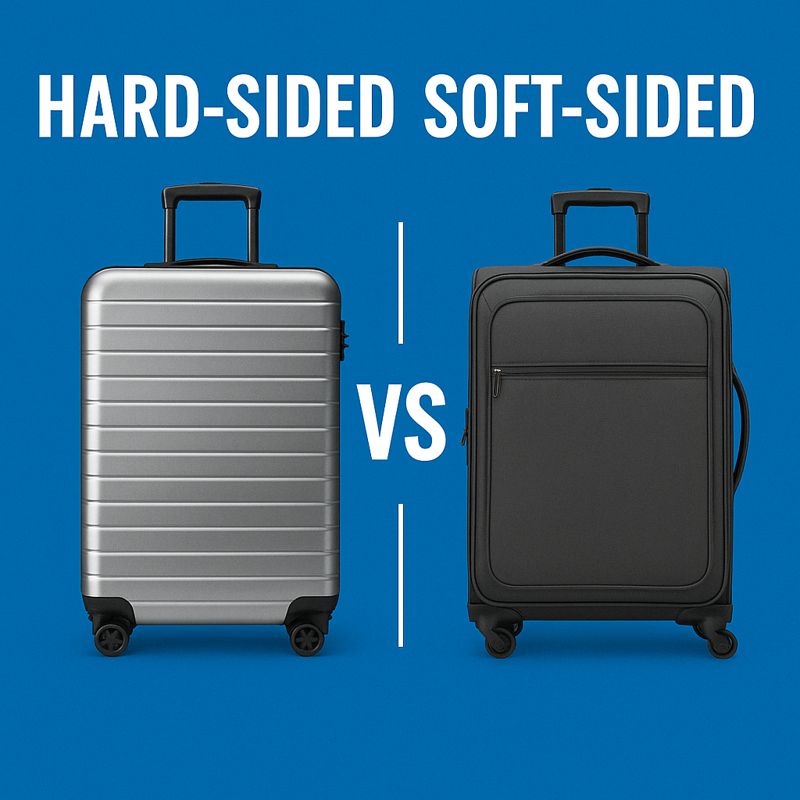
Choosing the right luggage is one of the most important—and most overlooked—travel decisions you can make. Your suitcase affects how easily you move through airports, how well your items are protected in transit, and how efficiently you can pack for your itinerary. The biggest decision most travelers face is whether to go with hard-sided luggage or soft-sided luggage.
Both styles have improved dramatically in recent years: hard-shell suitcases now use lightweight polycarbonate and better wheel systems, while soft-sided bags have evolved with stronger ballistic fabrics, more thoughtful pocket layouts, and bigger expansion zones. This guide breaks down the differences in a practical, scenario-based way—then ranks the best options you can buy on Amazon today. Quick Comparison:
- Hard-Sided vs Soft-Sided Overview
- Carry-On vs Checked: What Changes
- Hard-Sided Luggage: Pros & Cons
- Best Hard-Sided Luggage
- Soft-Sided Luggage: Pros & Cons
- Best Soft-Sided Luggage
- Luggage FAQ
If you’re building a full travel kit, you’ll also want to check our guides on the best travel backpacks, packing cubes for organized travel, and TSA-approved luggage locks. These pair perfectly with the luggage choice you make here.
Hard-Sided vs Soft-Sided Luggage: At-a-Glance Comparison
The simplest way to think about this decision is protection vs flexibility. Hard-sided luggage is built to shield what’s inside—especially useful when you check bags or pack fragile items. Soft-sided luggage is built to adapt—especially useful when you want exterior pockets, expandability, or a bag that fits in tighter spaces.
| Feature | Hard-Sided Luggage | Soft-Sided Luggage |
|---|---|---|
| Primary materials | Polycarbonate, ABS, aluminum | Nylon, ballistic nylon, polyester |
| Protection level | Excellent impact/crush resistance | Moderate; flexible under pressure |
| Weather resistance | Often higher (shell sheds moisture) | Varies by fabric/coating; can absorb water |
| Expandability | Limited or none (some models expand) | Common and often generous |
| Exterior pockets | Rare | Very common (front panels, quick-access) |
| Packing style | Structured clamshell; internal dividers | Flexible; pockets + expansion = easier overpacking |
| Best for | Flights, fragile items, international trips | Road trips, business travel, “grab-and-go” access |
Quick decision shortcut
Fly often (especially checking bags)? Start with hard-sided. Prefer pockets, expansion, and flexibility? Start with soft-sided. You can always build a matching set later.
Shop a Top Hard-Sided Pick Shop a Top Soft-Sided Pick
Tip: If you’re unsure, choose a carry-on first (lowest commitment) and add a checked bag once you know your preference.
Carry-On vs Checked Luggage: What Changes (and What Doesn’t)
The hard vs soft choice depends on how you travel. A carry-on is about speed, access, and overhead-bin fit. A checked bag is about durability, protection, and total capacity. Use the tables below to match your luggage style to your most common trip type.
Carry-On Luggage: Hard-Sided vs Soft-Sided
| Feature | Hard-Sided Carry-On | Soft-Sided Carry-On |
|---|---|---|
| Overhead-bin fit | Consistent shape; less forgiving on small planes | Can compress slightly; often easier fit |
| Quick access | Usually minimal external pockets | Better for laptop/charger/passport pockets |
| Protection | Excellent for tech and fragile items | Good, but less crush protection |
| Capacity feel | Structured packing; typically ~35–45L | Often feels roomier; ~40–50L with expansion |
| Best traveler type | Minimalists, tech carry, frequent flyers | Business travelers, overpackers, quick-access lovers |
Best for (Carry-On):
- Hard-sided carry-on = flights + fragile items + structured packing
- Soft-sided carry-on = pockets + flexibility + business travel
Checked Luggage: Hard-Sided vs Soft-Sided
| Feature | Hard-Sided Checked Bag | Soft-Sided Checked Bag |
|---|---|---|
| Impact/crush resistance | Excellent; best protection in cargo holds | Moderate; fabric can flex under pressure |
| Weather resistance | Typically better; shell sheds rain/snow | Depends on fabric; can absorb moisture |
| Capacity | Great structure; ~90–110L common in large sizes | Often more usable space; ~95–120L with expansion |
| Organization | Clamshell packing; internal dividers | Interior + exterior pockets; easier “top-load” access |
| Best traveler type | International trips, fragile souvenirs, multi-flight itineraries | Road trips, family packing, flexible loadouts |
Best for (Checked Bags):
- Hard-sided checked = more flights + more protection + rough handling
- Soft-sided checked = more volume + more pockets + family/road travel
Hard-Sided Luggage: Pros, Cons, and Best Uses
Hard-sided luggage is ideal when protection is non-negotiable. If you’ve ever opened a checked bag and found cracked toiletries, crushed souvenirs, or broken items, you already understand the appeal. A rigid shell reduces the risk of damage from impacts, compression, and rough baggage handling—especially on tight connections where bags are moved fast and stacked high.
Pros of Hard-Sided Luggage
- Superior protection for electronics, gifts, bottles, and fragile souvenirs
- Strong crush resistance during baggage handling and overhead-bin pressure
- Often better weather resistance (wipeable shell)
- Structured clamshell packing makes organization easier
- Easy to clean exterior
Cons of Hard-Sided Luggage
- Less flexible when you’re trying to “squeeze in one more thing”
- Typically fewer exterior pockets for quick access
- Cosmetic scuffs and scratches are more visible
- Can feel bulky in tight hotel rooms or packed vehicles
Best Travel Scenarios for Hard-Sided Luggage
- International travel with multiple flights and transfers
- Trips where you pack tech, breakables, or expensive items
- Snowy/wet destinations where water resistance matters
- Cruises and resort travel where the bag moves through multiple hands
Top 5 Hard-Sided Luggage Options
Ranking criteria: durability, value, brand reputation, warranty support, real-world popularity, and traveler-friendly design. Prices can fluctuate daily on Amazon, so we recommend checking current listings before buying.
| Rank | Product | Notable Features | Affiliate Link |
|---|---|---|---|
| 1 | Away Bigger Carry-On Luggage | Lightweight polycarbonate shell, premium look/feel | Check Price |
| 2 | Samsonite Winfield 2 (28″ Checked Large) | Scratch-resistant shell feel, strong mainstream reliability | Check Price |
| 3 | Travelpro Maxlite Air Hardside (Large Check-In) | Expandable, travel-friendly features, strong value | Check Price |
| 4 | TUMI 19 Degree Extended Trip Expandable | Luxury build, premium components, brand prestige | Check Price |
| 5 | Amazon Basics Hardside Spinner | Budget-friendly, straightforward features, solid starter | Check Price |
Best for:
- Travelers who check bags often and want maximum protection
- Trips where you pack electronics, gifts, or fragile souvenirs
- International itineraries with multiple flights and transfers
Ready to pick a hard-sided suitcase?
Start with our #1 hard-shell pick, then compare today’s pricing, colors, and delivery windows on Amazon.
✅ Check #1 Hard-Sided Pick on Amazon
Compare our #2 pick (Samsonite Winfield 2) →
Soft-Sided Luggage: Pros, Cons, and Best Uses
Soft-sided luggage is the go-to choice for travelers who want flexibility and convenience. The biggest win is simple: pockets + expandability. If you like stashing chargers, snacks, a light jacket, or travel documents in an exterior compartment, soft-sided bags feel more “liveable” during the trip—especially when you’re moving through airports, trains, or busy hotel lobbies.
Soft-sided luggage also tends to be more forgiving in tight spaces. It can compress slightly into car trunks, overhead bins, and cramped hotel storage. For road trips and family travel, that flexibility often outweighs the added protection of hard shells.
Pros of Soft-Sided Luggage
- Expandable packing capacity (great for souvenirs)
- Exterior pockets for quick access to essentials
- Often lighter and easier to maneuver
- More forgiving fit in tight spaces (cars, small overhead bins)
Cons of Soft-Sided Luggage
- Less impact protection for fragile items
- Weather resistance varies (fabric can absorb moisture)
- Fabric can wear or snag over time
Best Travel Scenarios for Soft-Sided Luggage
- Road trips and family vacations (flexible packing matters)
- Business travel (quick-access pockets are a big win)
- Trips where you expect to bring home extras
- Train/bus travel with varied storage constraints
Top 5 Soft-Sided Luggage Options
Ranking criteria: real-world practicality, organization, durability, value, wheel performance, and brand trust. For many travelers, soft-sided luggage delivers the best day-to-day usability—especially when you want pockets and expandability.
| Rank | Product | Notable Features | Affiliate Link |
|---|---|---|---|
| 1 | Travelpro Platinum Elite Softside (29″ Checked Large) | Premium softside build, excellent organization, strong reputation | Check Price |
| 2 | Briggs & Riley Baseline (29″ Large Expandable Spinner) | Premium build, expandable, brand famous for long-term durability | Check Price |
| 3 | Samsonite Aspire Xlite (Carry-On listing) | Lightweight, flexible, great value for everyday travel | Check Price |
| 4 | Osprey Transporter 90L Wheeled Travel Duffel (Rugged rolling option) | Adventure-ready durability, water resistance, built for rough travel | Check Price |
| 5 | Amazon Basics Softside (28″ Large Checked) | Budget-friendly, expandable, solid starter checked bag | Check Price |
Best for:
- Travelers who want exterior pockets and easy access to essentials
- Road trips and family travel where flexible packing matters
- Overpackers who like expandable space for souvenirs
Want the most practical soft-sided luggage?
If you value pockets, flexibility, and expandability, start with our #1-ranked soft-sided pick—then compare current Amazon pricing.
✅ Check #1 Soft-Sided Pick on Amazon
Compare our #2 pick (Briggs & Riley Baseline) →
Before your next trip, you may also want to upgrade the rest of your packing system: best travel accessories and carry-on luggage size rules are two of our most useful “save you time at the airport” resources.
Hard-Sided vs Soft-Sided Luggage FAQ
Is hard-sided or soft-sided luggage better for flying?
Hard-sided luggage is generally better for flying—especially if you check bags—because it offers superior protection against impact and crushing in cargo holds. For carry-ons, it’s also great if you travel with electronics or fragile items.
Does soft-sided luggage hold more than hard-sided luggage?
Soft-sided luggage often holds more in real life because flexible fabric and expansion panels make it easier to fit bulky clothing and last-minute items. It’s also more forgiving if you tend to bring home souvenirs.
Which type of luggage is more durable?
High-quality hard-sided luggage typically wins on impact protection, while premium soft-sided luggage (especially ballistic nylon) can last a very long time and may show less cosmetic wear. Durability comes down to shell/fabric quality, zipper strength, and wheel construction.
Is hard-sided luggage heavier?
Hard-sided luggage can be slightly heavier, but modern polycarbonate designs have narrowed the difference significantly. In many cases, the wheel system and handle build affect perceived weight more than the shell type.
What luggage is best for international travel?
For international travel with multiple flights, hard-sided luggage is often the safer option due to better protection and weather resistance. If you’re taking trains or packing flexible outfits for varied climates, soft-sided luggage can still be a strong choice—especially in carry-on form.
Should I own both hard-sided and soft-sided luggage?
Many frequent travelers do. A common “best of both worlds” setup is a hard-sided carry-on for tech and valuables plus a soft-sided checked bag for flexible packing and extra pockets.